
Reading list · 8 books, ranked
The Best Books About Artificial Intelligence
These eight books run from AI’s pre-internet origins to the era of large language models, offering both optimistic and cautious perspectives. Whether you're curious about how machine learning actually works, worried about what AI means for society, or trying to understand the breathless coverage of ChatGPT, these books ground you in the ideas that matter.
Updated 2026-07-13
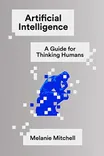
Artificial Intelligence: A Guide for Thinking Humans
Melanie Mitchell · 2019
Mitchell traces AI's evolution from early symbolic approaches (getting computers to follow logical rules) to today's neural networks, which instead learn patterns from data. She explains what modern AI systems can and cannot do, and addresses the gap between hype and reality. The book grounds itself in actual technical achievements while remaining skeptical of breathless predictions.
This is the go-to primer for understanding how and why AI developed differently than 1950s researchers imagined. Mitchell writes from decades inside the field and structures the book around real capabilities, not speculation, making it essential first reading.
Co-Intelligence: Living and Working with AI
Ethan Mollick · 2024
Mollick moves past abstract debates to ask how you actually use AI systems right now. He argues AI is neither savior nor threat but a tool that amplifies human capability when wielded thoughtfully. The book combines personal experiments, practical patterns, and honest discussion of where AI fails, offering readers concrete ways to think about working alongside these systems.
Most AI books ask 'What will AI do to us?' This one asks 'What can we do with it?' For readers wanting to understand LLMs through direct use cases rather than philosophy or fear, this bridges the gap between theory and your actual work.
Life 3.0: Being Human in the Age of Artificial Intelligence
Max Tegmark · 2017
Tegmark moves through AI's history, the mechanics of current machine learning, and scenarios for the future ranging from utopias to catastrophes. He sketches what happens if machines surpass humans at most cognitive tasks and explores how society might adapt. The book takes seriously both the possibility that AI solves major problems and that it poses risks.
This book doesn't pick a side; it maps out the territory. Tegmark's background in physics gives him discipline about what's physical possibility versus speculation, and he acknowledges uncertainty while still forcing you to think through the implications.
The Alignment Problem: Machine Learning and Human Values
Brian Christian · 2020
Christian investigates a deceptively simple problem: how do you teach an AI system what humans actually want rather than just what it's instructed to optimize for? He traces real examples of AI going sideways (recommending self-harm, gaming reward signals) and talks to researchers building safety checks. The book argues this problem will only grow more urgent.
This is the skeptical counterweight to optimistic predictions. Christian shows why capability alone doesn't equal safety, using concrete cases that don't require technical background. If you want to understand what could go wrong, start here.
The Singularity Is Near: When Humans Transcend Biology
Ray Kurzweil · 2005
Kurzweil projects exponential growth in computing power, genetic engineering, and nanotechnology converging toward a point where machines surpass human intelligence and speed up their own improvement. He argues this trajectory is inevitable based on historical patterns. The book's scope spans decades of research and extrapolates aggressively into speculative futures.
This is the pre-LLM optimist's classic. Reading Kurzweil shows you what AI researchers in 2005 thought the path forward looked like, and where current progress validates or contradicts those assumptions. Understanding this vision matters for context on where debates come from.
Why Machines Learn: The Elegant Mathematics Behind Modern AI
Anil Ananthaswamy · 2024
Ananthaswamy explains the math behind machine learning without requiring calculus background. He walks through linear regression, neural networks, and deep learning by showing how these techniques evolved from older ideas about finding patterns in data. Each chapter builds on the last, revealing why certain approaches work.
Most AI books skip the mechanics or drowns you in formulas. This one translates the actual math into intuition. You'll understand what training means, why bigger datasets help, and why some AI approaches work where others fail.
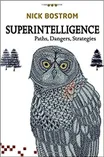
Superintelligence: Paths, Dangers, Strategies
Nick Bostrom · 2014
Bostrom takes the scenario of artificial general intelligence seriously and explores what happens if machines reach and exceed human-level cognition across all domains. He examines how an AGI might self-improve, what could go wrong, and what safety measures might matter. The book is rigorous and doesn't shy from uncomfortable conclusions.
This 2014 work anticipated concerns that have only grown more relevant. While some specifics have shifted, Bostrom's reasoning about intelligence, power, and alignment shaped how researchers now think about existential risk. It's the skeptic's classic, and worth reading if you're serious about understanding downside scenarios.
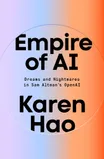
Empire of AI: Dreams and Nightmares in Sam Altman's OpenAI
Karen Hao · 2025
Hao pulls back from technical debates to ask who controls AI development and what they're optimizing for. She investigates OpenAI's path from nonprofit to capped-profit, the intense competition with Google, and how geopolitical concerns shape the race. The book centers power, incentives, and governance as much as capability.
This is the critical look at how AI systems get built and deployed in the real world, not in labs. If you've wondered about the business dynamics behind ChatGPT or worried about concentration of power, this connects those concerns to concrete decisions and rivalries.
From the shelf to the field
From reading about AI to building with it
These books explain what the systems are; they will not teach you to ship one. For working programmers and career changers, the fastest structured route is a bootcamp, and the quality spread between AI bootcamps is enormous right now.
This comparison of AI and machine learning bootcamps judges them by curriculum and outcomes rather than marketing copy.
Where to go next
- data science bootcamps · the broader route into the same tooling