
Reading list · 9 books, ranked
The Best Books About Child Development
Real science changes how you see children. These books move beyond parenting trends to show what attachment, play, language, and resilience actually look like. They're written for parents, teachers, and anyone training to work with kids, drawing on decades of research about how children really grow.
Updated 2026-07-13
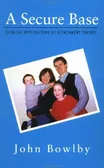
A Secure Base
John Bowlby · 1988
Bowlby, a psychiatrist who spent decades observing how children form bonds with their parents and caregivers, presents a framework for understanding attachment. The book collects lectures he gave near the end of his career, laying out how early relationships shape a child's ability to trust, explore, and connect throughout their life. His work shows why caregivers matter and what happens when those bonds are threatened or broken.
This is where attachment theory begins. For parents, teachers, and school psychologists, Bowlby's work is the foundation for understanding why connection matters so much. It explains behavior in ways that change how you respond to children.
What Happened to You?
Bruce D. Perry and Oprah Winfrey · 2021
Perry, a neuroscientist who has spent his career treating traumatized children, shifts the question from 'What's wrong with you?' to 'What happened to you?' The book weaves neuroscience about how adverse experiences rewire young brains with Oprah's own stories of childhood harm and recovery. It shows how trauma changes development and what adults can do to help kids heal.
This book takes attachment theory into the real world of childhood adversity. It's essential for understanding why some kids act out, shut down, or struggle in school, and how to respond without making things worse. Teachers and school psychologists need this lens.
The Whole-Brain Child
Daniel J. Siegel and Tina Payne Bryson · 2011
Siegel, a neuropsychiatrist, and Bryson, a parenting educator, translate neuroscience into practical strategies. They explain how the developing brain works, why tantrums happen, and how adults can help kids integrate their emotional and logical brain halves. Each chapter includes a problem (a meltdown, sibling conflict, defiance) and a concrete approach to address it.
This book makes brain science clear without oversimplifying it. Teachers and parents use it constantly because it explains what's happening and what to do. It's the most accessible bridge between neuroscience and daily life.
Play
Stuart Brown · 2009
Brown, a clinical researcher, interviewed thousands of people about their play histories and discovered something unexpected: people who played less in childhood often struggled more later. The book shows how play isn't frivolous; it's how brains wire themselves for learning, resilience, and social connection. Brown draws from animal behavior, criminal psychology, and childhood research to make the case.
Play is where attachment and learning actually happen, but it's often cut short in modern schools and homes. This book gives hard evidence for why play matters and what happens without it. It's essential reading if you care about real development instead of test scores.
The Irreducible Needs of Children
T. Berry Brazelton and Stanley I. Greenspan · 2000
Two giants in child development define what kids actually need: ongoing nurturing relationships, safety, experiences matched to how they learn, reasonable limits, supportive community, and access to healthcare and education. The book is built on their decades observing infants and young children, and it cuts through noise to say what matters.
This book answers a simple question: what do children truly require to grow? It's useful as a reference for parents questioning whether they're doing enough and for teachers defending play and relationships in an age of standardized testing.
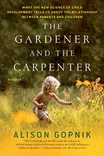
The Gardener and the Carpenter
Alison Gopnik · 2016
Gopnik, a leading researcher in child psychology and development, argues that the modern idea of intensive parenting is both scientifically wrong and stressful. She shows that children are designed to be messy, unpredictable, and exploratory, not products to be shaped toward a goal. The book draws on evolution, her own research, and hundreds of studies to show what childhood is actually for.
If you've felt guilt or anxiety about parenting, this book permission to let go. For teachers, it's ammunition against cookie-cutter curriculum. For school psychologists, it helps explain why anxious kids often come from anxious parents trying too hard to optimize.
The Scientist in the Crib
Alison Gopnik, Andrew N. Meltzoff, and Patricia K. Kuhl · 2000
Three leading researchers show how babies think, learn language, and understand other people from day one. They describe experiments demonstrating that infants are not blank slates but active learners testing hypotheses about the world. The book covers how babies figure out objects, language, and minds through play and observation.
This book is gold for anyone working with very young children or training teachers of early childhood. It demolishes the myth that babies are passive and shows why early language matters. Teachers and parents gain respect for how babies and toddlers already work as scientists.
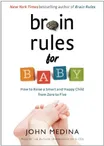
Brain Rules for Baby
John Medina · 2010
Medina, a molecular biologist, reviews neuroscience research on how brains develop from pregnancy through age five. He covers stress effects, sleep, movement, play, language input, and how parental behavior shapes developing neurons. Each chapter starts with what the research says, then what parents can actually do.
This book gives neuroscience credibility to common sense: babies need sleep, movement, storytelling, and calm caregivers. For parents doubting whether they need to buy special toys or hire tutors, Medina's clear explanation of what the brain actually needs is reassuring.
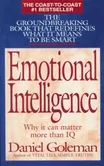
Emotional Intelligence
Daniel Goleman · 1995
Goleman argues that IQ alone doesn't predict success; how children recognize and manage emotions, empathize, and handle relationships matters more. The book covers how emotional skills develop in childhood, why schools need to teach them, and what teachers and parents can do to build emotional capacity. He shows that empathy starts in infancy and can be strengthened.
Teachers spend time managing emotions in the classroom but often get no training on how. This book explains why emotional literacy is as important as reading and math. For school psychologists and counselors, it justifies spending time on social-emotional learning instead of just fixing problems.
From the shelf to the field
When the shelf becomes a calling
Plenty of teachers and parents read attachment research for their own kids and end up wondering about the professional version of the work. Child psychology is that profession: assessment, therapy, and research with the developmental science these books introduce as its daily toolkit.
See what child psychologists do and how they train if the interest is starting to feel like more than reading.
Where to go next
- child and family social work · the casework side of the same science
- special education teaching · where development research meets the classroom