
Reading list · 8 books, ranked
The Best Books About Health Informatics
Health information management and informatics students need books that explain both theory and practice, but especially the messy reality of how medical records and systems actually work. This list focuses on foundational HIM textbooks, the technical side of health IT, and the hard truths about EHRs and healthcare data. These books show you what the work is really like, not just the textbook version.
Updated 2026-07-13
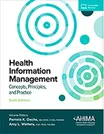
Health Information Management: Concepts, Principles and Practice
Pamela K. Oachs, Melissa Watters · 2020
This is the standard HIM textbook covering data governance, electronic health records, privacy and security regulations, coding and compliance, and health information exchange. It walks through how health information flows through healthcare systems, from capture to analysis to legal accountability. Chapters align with the major domains tested on RHIA and RHIT certification exams.
If you're studying HIM, this is the foundational book every program uses. It covers the day-to-day work of managing medical records and health data in real healthcare settings, not simplified theory.
Biomedical Informatics: Computer Applications in Health Care and Biomedicine
Edward H. Shortliffe, James J. Cimino · 2006
Shortliffe and Cimino's book tackles the technical foundations of health informatics: data standards, natural language processing, clinical decision support systems, EHR architecture, and interoperability. It balances theory with real implementations and shows how information systems are actually built to handle medical data. The book covers medical terminology standards (SNOMED CT, LOINC) and data exchange protocols (HL7).
This is where you learn why a simple database doesn't work for medical records. Understanding data structures, standards, and system design is critical for any HIM professional working with health IT.
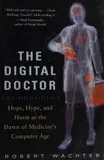
The Digital Doctor: Hope, Hype, and Harm at the Dawn of Medicine's Computer Age
Robert M. Wachter · 2015
Wachter is a physician and patient safety expert who spent years embedded with clinicians using EHRs. The book reveals the gap between what IT vendors promise and what actually happens at the bedside: workarounds around broken workflows, alert fatigue that leads doctors to ignore critical warnings, and cases where the EHR itself created medical errors. Real hospitals and real mistakes.
You need to see the flip side of the technological vision. This book shows why EHR implementations often go wrong, how data quality suffers, and how clinicians respond to systems that get in the way of patient care.
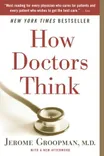
How Doctors Think
Jerome Groopman · 2007
Groopman, a physician and researcher, explores how diagnostic errors happen by interviewing leading doctors and examining real cases. He documents cognitive shortcuts that lead to misdiagnosis: jumping to conclusions after finding one positive finding, stereotyping patients, anchoring on first impressions. The book shows that 80 percent of diagnostic errors come from how doctors think, not from gaps in medical knowledge.
Health informatics students need to understand the human factors behind data collection and clinical decision-making. If you're building systems, you need to know how doctors actually use information when making critical decisions.
To Err Is Human: Building a Safer Health System
Institute of Medicine · 2000
This landmark report found that between 44,000 and 98,000 Americans die each year from preventable medical errors in hospitals. The committee shows that most errors are not individual failures but system failures. Poor handoffs, inadequate information flow, missing communication, and lack of feedback loops create the conditions where errors happen. The report launched the modern patient safety movement.
This is the foundational document for understanding why health informatics matters. Better data management, clearer communication systems, and better information tools directly reduce preventable harm.
Crossing the Quality Chasm: A New Health System for the 21st Century
Institute of Medicine · 2001
The IOM committee identifies a massive gap between what we know makes healthcare work and what patients actually receive. The report proposes six aims for improvement: safety, effectiveness, patient-centeredness, timeliness, efficiency, and equity. It describes how care delivery should be redesigned around information systems, measurement, and continuous improvement cycles.
This book gives you the framework for thinking about how health informatics supports broader quality goals. You'll understand not just how to manage data, but why it matters to patient outcomes and system performance.
Electronic Health Records: A Guide for Clinicians and Administrators
Jerome H. Carter · 2008
Carter walks through the practical side of EHR implementation and use: how to build clinical workflows, what clinicians actually need from an EHR, common pitfalls in system design, and strategies for successful adoption. The book covers documentation requirements, data validation, and how to structure EHRs so they serve both clinical and administrative needs.
If you're going to work with EHRs professionally, this book shows you the implementation side without the marketing. You'll see why requirements gathering is hard and how to avoid common design mistakes.
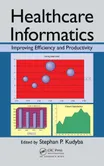
Healthcare Informatics: Improving Efficiency and Productivity
Stephan P. Kudyba · 2010
Kudyba's book covers data analytics, business intelligence, and performance management in healthcare systems. It explains how to extract value from health data: predicting patient risk, identifying quality gaps, reducing costs, and optimizing operations. The book includes real case studies of healthcare organizations using data to make decisions.
Modern HIM professionals need to understand data analytics and systems efficiency. This book shows how health information translates into actionable business and clinical insights.
From the shelf to the field
The mess in these books is a job description
Every horror story in this list, the unusable EHR, the data nobody reconciles, the billing codes at war with clinical reality, is also a standing job posting. Health systems hire people specifically to make this mess legible.
The most common entry point is the health data analyst career path, which pays better than most people guess and rarely requires a clinical background.
Where to go next
- the RHIA credential · the management-track certification
- clinical documentation careers · fixing the records these books complain about
- HIM director careers · where the field tops out