
Reading list · 8 books, ranked
The Best Books About Poverty and Inequality
These books show what poverty actually looks like in America through the eyes of journalists, sociologists, and researchers who spent years doing fieldwork. You'll find no shortcuts here, just meticulous reporting that traces poverty back to housing policy, wages, criminal law, and the way class systems work. These writers report what they see rather than what fits a narrative.
Updated 2026-07-13
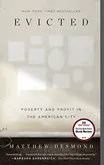
Evicted: Poverty and Profit in the American City
Matthew Desmond · 2016
Desmond spent years in Milwaukee following eight families as they fought to keep shelter. He documents how they lost homes not because of personal failures but because rent consumed half their income. The book traces the machinery of eviction itself, showing how it works as a poverty machine.
A Pulitzer Prize winner that fundamentally changed how people think about housing. Desmond reports rather than theorizes, and his numbers add weight to every scene. This is the standard for poverty journalism.
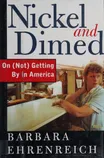
Nickel and Dimed: On (Not) Getting By in America
Barbara Ehrenreich · 2001
Ehrenreich worked minimum-wage jobs as a waitress, maid, and retail clerk to test whether wages could support actual life. She lived in motels and cheap rentals while making poverty money. The book documents what she actually encountered, not what economic theory predicts.
Published in 2001 and still holds up completely. Ehrenreich went undercover to answer a real question, and the answer troubles anyone who reads carefully. It's reporting disguised as memoir.
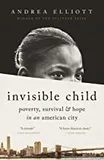
Invisible Child: Poverty, Survival & Hope in an American City
Andrea Elliott · 2021
Elliott followed a homeless girl through New York City public schools and shelters over a decade. The book traces how a single family survives, what happens to kids under chronic poverty stress, and what institutions fail to do. It's reported journalism at the highest level.
A recent Pulitzer Prize winner that applies newspaper discipline to a single family's life. Elliott's reporting is granular and unsentimental. She shows you systems, not just hardship.
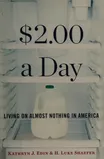
$2.00 a Day: Living on Almost Nothing in America
Kathryn Edin and H. Luke Shaefer · 2015
Two sociologists documented families living on less than two dollars per person per day, a number most Americans don't know exists. The book shows what survival looks like when there is literally no margin for error: side gigs, under-the-table work, help from relatives, hunger.
This book defines the bottom of the American economy. Edin and Shaefer are rigorous researchers who counted carefully and reported what they found. It's a hard read, but it answers a question most people never ask.
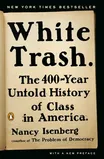
White Trash: The 400-Year Untold History of Class in America
Nancy Isenberg · 2016
Isenberg traces American ideas about poor white people from colonial times to today. She shows that poverty wasn't accidental but designed, and that every era had words for the people who were deemed disposable. The book connects class hierarchy to land, labor, and how America was built.
You cannot understand current inequality without historical context. Isenberg's reporting is scholarly but grounded, and she explains why poverty and class looked the way they did at each moment. It's not polemic, it's history.
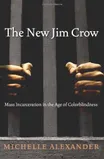
The New Jim Crow: Mass Incarceration in the Age of Colorblindness
Michelle Alexander · 2010
Alexander, a civil rights lawyer, argues that mass incarceration functions as a caste system. The War on Drugs targeted Black communities, creating a legal mechanism for permanent exclusion from work, housing, and voting. The book connects criminal justice to poverty directly.
This book is essential because it shows how poverty and policing reinforce each other. Alexander reports on legal structures and their effects on real people. Anyone reading about poverty must reckon with how the criminal system traps poor families.
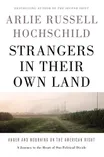
Strangers in Their Own Land: Anger and Mourning on the American Right
Arlie Russell Hochschild · 2016
Hochschild, a sociologist, lived in Louisiana for years interviewing working people about their lives and politics. She documents how people make sense of stagnant wages, lost communities, and the disappearance of the life they expected. The book is her field notes.
Hochschild doesn't judge or simplify. She reports what people told her and helps you understand why inequality feels personal to them. This is sociology done through listening, not ideology.
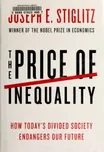
The Price of Inequality: How Today's Divided Society Endangers Our Future
Joseph E. Stiglitz · 2012
Stiglitz, a Nobel laureate economist, documents how inequality is created by policy choices, not market forces. He traces specific decisions about labor law, finance, taxation, and education that made America less equal. The book is data-driven rather than anecdotal.
You need someone who knows economics to explain how the system works. Stiglitz's argument that inequality is a policy choice, not an accident, holds up to scrutiny. This book shows the machinery while others show the consequences.
From the shelf to the field
Reading about the problem, working on it
Desmond and Ehrenreich reliably leave readers with the same restless question: who actually does something about this every day? The unglamorous answer is community social service work, the caseworkers and coordinators operating exactly where these books are set.
If that is where the reading points you, start with community social service careers and the BSW behind them.
Where to go next
- case management careers · the coordination work these books describe
- social work credentials explained · what the letters after the names mean