
Reading list · 8 books, ranked
The Best Books About Search Engines and the Internet
These eight books reveal how search engines work, how the web came to be, and who controls the information we find. You'll discover the technical foundations, the companies that dominate search, the politics behind internet infrastructure, and why the economics of attention matter to everyone online.
Updated 2026-07-13
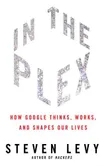
In the Plex
Steven Levy · 2011
Steven Levy spent years embedded at Google to write this account of the company's growth from Stanford research project to a 24,000-person operation that mediates our access to information. The book traces key decisions about search technology, China strategy, and social networking attempts, showing how Google's engineering mindset shaped its approach to problems.
This is the definitive modern history of Google. Levy, a technology journalist with decades of credibility, shows you exactly why Google became dominant and what the company actually believes about organizing information.

The Search
John Battelle · 2005
Battelle examines search as the 'database of our intentions,' mapping the competitive landscape before Google's triumph. He tracks the evolution from AltaVista and Yahoo through Google's rise, exploring what search engines reveal about what people actually want and how companies turned that knowledge into an advertising empire.
This book captures the moment when search became essential infrastructure. Written in 2005, it analyzes the economics and cultural shift that search enabled, making it crucial for understanding why Google matters beyond just finding websites.
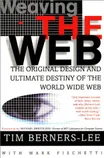
Weaving the Web
Tim Berners-Lee · 1999
Tim Berners-Lee, the inventor of the World Wide Web, recounts how he built the first HTTP server and HTML browser while working at CERN. He explains the choices that shaped the web's architecture and reflects on privacy, censorship, intellectual property, and the balance between commercial and social forces in the web's evolution.
You'll never fully understand the modern internet without hearing directly from the person who invented the web. Berners-Lee's own account reveals why he made certain design decisions and his hopes for how the web could serve humanity.
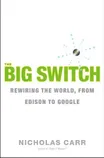
The Big Switch
Nicholas Carr · 2008
Carr draws a parallel between the shift from local power generation to electric utilities and the current shift to cloud computing. He argues that computing is becoming a centralized utility, controlled through massive server farms and distribution networks, with consequences for power, economics, and privacy.
This book explains the infrastructure that makes search and the internet possible. Understanding the cloud computing revolution helps you see why companies like Google became so powerful and why internet services feel increasingly remote and controlled.
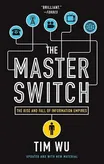
The Master Switch
Tim Wu · 2010
Wu identifies a recurring pattern in media history: new technologies start open and chaotic, then get centralized under a monopoly or cartel. He traces telephone, radio, film, and television to show how each went from distributed innovation to corporate control, then asks whether the internet will follow the same path.
This historical framework helps you see why search engines and internet platforms concentrate power. Wu's pattern explains why Google and similar companies inevitably grew dominant, and what happens when information infrastructure gets controlled by a few players.
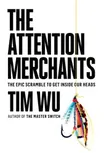
The Attention Merchants
Tim Wu · 2016
Wu traces how the business model of capturing human attention and selling it to advertisers became the foundation of modern media. Starting with penny newspapers in the 1800s, he shows how radio, television, and the internet all adopted the same free-content-for-ads formula that drives Google and Facebook.
Search engines seem free because users aren't paying with money. This book explains exactly how and why the attention economy works, revealing the economics that makes Google's search dominance so profitable.
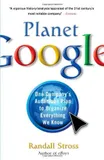
Planet Google
Randall E. Stross · 2008
Stross gained rare access to Google's headquarters to document the company's audacious goal of organizing all the world's information. He examines the scale of Google's ambitions, its approach to privacy and copyright controversies, and the decisions that turned search into a gateway to knowledge.
For a close-up look at how Google operates and thinks, this book provides the behind-the-scenes details that other histories miss. Stross doesn't shy away from Google's missteps, giving a balanced view of the company's power and problems.
Introduction to Information Retrieval
Christopher D. Manning, Prabhakar Raghavan, Hinrich Schütze · 2008
This textbook explains the actual algorithms, data structures, and mathematical models that power search engines. Topics include indexing, ranking algorithms, probabilistic retrieval, and how search engines evaluate their own performance. The writing assumes no advanced background.
If you want to understand how search actually works beneath the Google interface, this is the book that explains it without requiring a computer science degree. It bridges the gap between curious reader and technical expert.
From the shelf to the field
The database of intentions, still growing
Battelle called search "the database of our intentions" in 2005, and the books on this list chart how that database got built, monetized, and fought over. The problem they describe, matching a messy human question to the right answer, is still being worked on in every vertical.
For one live example, hakia applies it to a single stubborn domain: helping people search degree programs by what they actually teach.