
Reading list · 8 books, ranked
The Best Books About Teaching
For teachers wrestling with the job and people curious about classroom life, these books cut through the noise with real stories, research, and unflinching honesty. Some will gut you. Others will give you tools. All of them matter.
Updated 2026-07-13
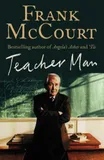
Teacher Man
Frank McCourt · 2005
McCourt recounts thirty years teaching English and history in New York City high schools, moving between classrooms in the Bronx, Brooklyn, and Manhattan. The book weaves together his own journey as an educator with portraits of the teenagers he encountered, capturing both the exhaustion and occasional grace of public school teaching. He doesn't hide the frustration: sitting at home surrounded by ungraded papers, worrying whether his students heard anything he said, feeling the weight of an indifferent system.
This is the most unflinching account of teaching's actual difficulty. McCourt earned his authority through three decades in struggling schools, and he writes with the dark humor and brutal honesty of someone who lived it. If you're wondering whether this job will destroy you, start here.
Death at an Early Age
Jonathan Kozol · 1967
Kozol taught fourth grade in a Boston public school in 1964 and documented the systemic inequality embedded in every aspect of his students' education. He describes a school building falling apart, staff hostility toward students, curricula designed to crush curiosity, and the explicit racial segregation baked into district policy. His accounts of individual moments are vivid and devastating: a child punished for artistic independence, a brilliant mind dimmed by institutional contempt.
This book is essential because it exposes how schools fail children not by accident but by design. Fifty years later, the inequities Kozol witnessed persist. If you want to understand the political structure of schooling beyond the classroom, this is foundational.
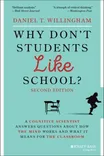
Why Don't Students Like School?
Daniel T. Willingham · 2009
Willingham, a cognitive psychologist, translates research on how memory, attention, and learning actually work into nine principles teachers can use immediately. He explains why students struggle with abstraction, how to make information stick, why background knowledge matters more than you think, and why effort alone doesn't guarantee learning. The book answers the recurring question teachers ask: why is this so hard to teach?
Understanding how brains work transforms your teaching. This book isn't abstract theory; it's concrete guidance grounded in decades of lab work and classroom observation. It validates your intuitions and fixes your misconceptions in equal measure.
Make It Stick
Peter C. Brown, Mark A. Roediger III, Henry L. Roediger · 2014
This book synthesizes research on learning and retention, focusing on what actually makes knowledge durable. The authors explain why cramming fails, why spacing practice over time works, why interleaving different types of problems beats blocked practice, and why testing yourself beats rereading. They illustrate each principle with real classrooms and learners, avoiding jargon while building a coherent picture of how long-term learning happens.
If you teach, you want students to remember what you teach. This book gives you the research-backed strategies to make that happen. It contradicts much of what students (and teachers) believe about studying, so reading it rewires your approach.
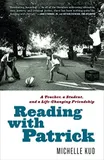
Reading with Patrick
Michelle Kuo · 2017
Kuo taught English in rural Arkansas as a Teach for America volunteer, then left for law school. Years later, learning that a former student named Patrick had been jailed for murder, she returned to Helena and tutored him through classic literature from a jail cell. The book interweaves her awakening as a young teacher, her years away, and her profound reconnection with Patrick through reading Frederick Douglass, James Baldwin, and Walt Whitman. It's a meditation on abandonment, redemption, and the power of literature to dignify a person the world has written off.
This book confronts a hard truth: leaving the classroom and forgetting your students is possible. It also models how a teacher can repair that rupture through sustained presence and faith in a student's potential. It will move you.
The Freedom Writers Diary
Erin Gruwell and the Freedom Writers · 1999
Erin Gruwell, a first-year teacher at an overcrowded, segregated high school in Long Beach, noticed racial tension between her students and found a note with a crude stereotype. She redesigned her curriculum around the question of tolerance and used Anne Frank's diary and Zlata's Diary as anchors. What follows is a narrative built from journal entries by Gruwell and her students, showing how writing became a tool for claiming dignity and building connection across racial divides. The class's ordinary struggles and small breakthroughs are woven throughout.
This is a counterbalance to the grimness of other memoirs. It shows what's possible when a teacher refuses to accept her students as disposable and creates space for them to see themselves. The students' own voices in the diary entries are powerful; their transformation is real.
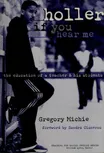
Holler If You Hear Me
Gregory Michie · 1999
Michie taught middle and high school in Chicago during the 1990s and wrote a memoir that alternates between his own discovery as a teacher and the voices of his students. He doesn't present himself as a savior; instead, he's figuring it out alongside them, often failing and trying again. The book captures the texture of urban teaching: young people navigating poverty, racism, and their own power; a teacher learning that his job involves far more than curriculum.
This book models intellectual humility and solidarity rather than heroics. Michie treats his students as thoughtful people embedded in real social constraints, not problems to fix. It's essential for teachers in underresourced schools and anyone thinking about what education owes to students living on the margins.
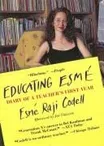
Educating Esmé
Esmé Raji Codell · 1999
Codell's first year teaching in a Chicago public school is told through diary entries and reflections. She's inventive and energetic, creating quirky lessons and fighting bureaucratic indifference, but she's also overwhelmed, doubting her sanity, and learning that enthusiasm alone doesn't manage a classroom. The book captures the emotional roller coaster of a novice teacher: moments of connection, stretches of exhaustion, the sting of criticism from colleagues, the weight of standardized testing, the joy of breakthrough.
If you're considering teaching or beginning your first year, this book is for you. It's honest without being demoralizing. Codell's specificity about what works and what doesn't (and why) makes this more useful than many teacher memoirs.