
Reading list · 8 books, ranked
The Best Books for CRNA Students
Nurse anesthesia training demands more than technical mastery. These eight books explore the culture of anesthesia, how clinicians think and err under pressure, and the philosophical questions that shape practice. They matter because they teach you to think like an anesthetist, not just act like one.
Updated 2026-07-13
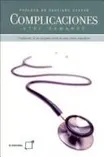
Complications
Atul Gawande · 2002
A surgeon reflects on the cases that went wrong, the ones he learned from, and what it takes to improve. Gawande walks through specific failures, near-misses, and the gaps between training and reality. Each chapter is a story that builds a framework for understanding how experienced clinicians actually prevent and respond to complications.
This is the foundational book for thinking about error in anesthesia. It models how to examine your own practice with honesty and shows that vigilance is learned, not innate.
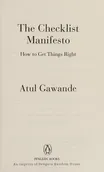
The Checklist Manifesto
Atul Gawande · 2010
Gawande investigates why pilots and surgeons use checklists, how they work, and why they fail when done poorly. He contrasts high-complexity aviation with emergency medicine to show that systematic review catches what individual memory cannot. The book traces real implementations in operating rooms and argues for a different kind of discipline.
For CRNA students, this book directly speaks to pre-op checks, briefings, and the power of protocol. It explains the culture behind safety that anesthesia relies on.
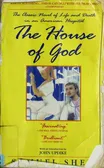
The House of God
Samuel Shem · 1978
A fictionalized account of an intern's year in an intensive care unit, told through black humor, aphorisms, and brutal honesty about patient care, hierarchy, and survival. The narrator and his peers navigate impossible hours, political medicine, and the gap between what they're taught and what actually happens. It's part memoir, part dark comedy, part moral reckoning.
Every anesthesia student faces the culture shock that Shem captures. This novel prepares you for that transition from classroom to ICU-level thinking, and models how experienced clinicians use humor to process what they see.
Thinking, Fast and Slow
Daniel Kahneman · 2011
A Nobel laureate psychologist explains how the human mind makes decisions under uncertainty. Kahneman separates intuition (fast thinking) from deliberation (slow thinking) and shows where each fails, how biases hide, and what patterns we mistake for understanding. The book is dense with experiments and evidence about how we actually judge risk and probability.
Anesthesia demands rapid decisions with incomplete data. Understanding your own cognitive shortcuts and blindspots is as important as knowing pharmacology. This book teaches you to recognize when your gut is guiding you and when you need to slow down and verify.
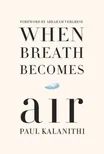
When Breath Becomes Air
Paul Kalanithi · 2016
A young neurosurgeon discovers he has terminal cancer and reflects on what his profession meant to him, what medicine failed to prepare him for, and what matters when life contracts. The book moves between his medical training, the arrogance and beauty of surgery, and his experience as a patient facing his own mortality.
This memoir shows the stakes of clinical work from the inside. Anesthetists hold the vital sign line between consciousness and oblivion, and this book captures what it means to hold that responsibility when you understand how fragile the patient actually is.
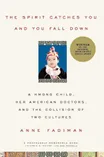
The Spirit Catches You and You Fall Down
Anne Fadiman · 1997
Fadiman documents the collision between a Hmong family and American medical providers over their daughter's epilepsy care. The book shifts between medical fact, cultural explanation, and family perspective to show how clinicians and patients speak past each other. It's part medical mystery, part anthropology, part indictment of cultural blindness.
For a CRNA working in diverse communities, this book is a master class in humility. It shows how your protocols and assumptions can override the patient's reality and why you need to listen harder than you think you do.
Being Mortal
Atul Gawande · 2014
Gawande returns to the question of what medicine should do when it cannot cure. He examines end-of-life conversations, the limits of treatment, and the gap between what doctors assume patients want and what they actually choose. Through patient stories and his own family, he argues for a different kind of conversation.
Many ICU patients transition to anesthesia at the end of life. This book teaches you to think about what the patient is hoping for, not just what your machines can do.
Crucial Conversations
Kerry Patterson, Joseph Grenny, Ron McMillan, Al Switzler · 2001
A framework for having high-stakes conversations when emotions run high and the stakes feel personal. The authors teach you to recognize when you've gone silent or aggressive, how to make it safe to talk, and how to listen for what the other person really means. The book is practical, with dialogue examples and techniques you can practice.
Anesthesia teamwork depends on speaking up about a concern without defensiveness and hearing feedback without shutting down. This book teaches you those skills in the language of operating rooms and ICUs.
From the shelf to the field
The vigilance is the job, the doctorate is the door
Every book on this list circles the same theme: anesthesia is hours of controlled calm punctuated by seconds that matter. Getting to practice it as a nurse means ICU years, a competitive application, and since 2025 a required doctorate.
This breakdown of how CRNA school works and what nurse anesthetists earn puts real numbers on the admissions math before you commit three more years.
Where to go next
- compare CRNA programs · doctorate-level, three years, ranked and compared
- how to become a CRNA · ICU years, applications, boards
- DNP programs · the required doctorate, compared