
Reading list · 8 books, ranked
The Best Books for Engineering Students
These eight books show how great engineering happens not in a vacuum but through the hard study of what breaks, how systems behave in the real world, and the gap between what we design and what actually works. Whether you're in civil, mechanical, electrical, or any other discipline, understanding failure, design thinking, and engineering culture separates practitioners who follow blueprints from engineers who think.
Updated 2026-07-13
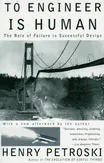
To Engineer Is Human
Henry Petroski · 1982
Petroski traces how failure isn't a flaw in engineering but the central engine of improvement. He walks through disasters like the Tacoma Narrows Bridge twisting apart in the wind and the Kansas City Hyatt Regency walkway collapse, showing what engineers learned from each one. Every structure that stands today was shaped by failures from similar structures in the past.
This is the book that changed how people think about engineering mistakes. It transforms failure from something to hide into something to learn from. If you read only one book on this list, make it this one.
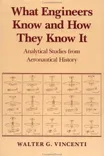
What Engineers Know and How They Know It
Walter G. Vincenti · 1990
Vincenti answers a question engineering school barely touches: what exactly do engineers know, and how do they come to know it? Using case studies from aviation history, he shows that engineering knowledge is not just applied science. It includes design concepts, technical specifications, practical rules that only work experience teaches, and patterns that emerge from building real things.
Most of your classes teach you science or math as tools. This book teaches you how your discipline actually produces knowledge. Understanding your own field's epistemology is what separates someone who can follow a procedure from someone who can invent new ones.
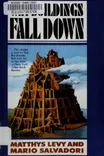
Why Buildings Fall Down
Matthys Levy and Mario George Salvadori · 1992
Two structural engineers examine famous collapses and breakdowns to find where human reasoning went wrong. The book covers structures from ancient domes that stood for millennia to modern buildings that came down unexpectedly. Each chapter is a forensic walkthrough of what the designer assumed and why that assumption failed.
Theory teaches general principles. This book teaches you specifics. You see the exact decisions that led to disaster and the second-order effects nobody anticipated. These stories become part of how you think about design.
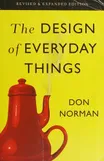
The Design of Everyday Things
Donald A. Norman · 1988
Norman dissects why some doorknobs, light switches, and alarm clocks confuse you while others seem to work by instinct. He shows that what feels like user error is usually design error. Good design makes the right action obvious. Bad design forces the user to guess what the engineer intended and blames them when they guess wrong.
Many engineering failures come from optimizing for the spec sheet rather than for human reality. Norman teaches you to see the gap between what people actually do and what you assume they'll do. It's a way of thinking that prevents entire categories of mistakes.
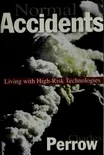
Normal Accidents
Charles Perrow · 1984
Perrow argues something unsettling: in complex systems like nuclear plants, chemical factories, and aircraft, accidents are inevitable no matter how much you invest in safety. The problem is not error or negligence but the tight coupling of components and unexpected interactions between parts. When everything connects to everything else, the opportunity for surprise failures multiplies.
This shifts you from thinking 'we can engineer away risk' to understanding that certain systems are fragile by their very nature. It's a sober read, but essential for anyone who will design systems where failure has real consequences.
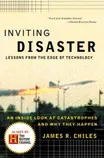
Inviting Disaster
James R. Chiles · 2001
Chiles narrates more than fifty historical catastrophes, from the 1937 Texas school gas explosion that killed almost three hundred people to the Challenger space shuttle disaster. Each story traces how small decisions and assumptions cascaded into tragedy. The narratives show engineering decisions that seemed reasonable at the time but led to unprecedented failure.
While other books teach principles abstractly, Chiles gives you stories that stick. Reading how a specific choice made by a specific engineer led to specific people dying is far more memorable than a theorem. These narratives shape how you think about your own decisions.
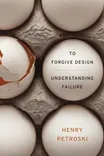
To Forgive Design
Henry Petroski · 2012
Petroski returns to the question of failure with modern case studies including the 2007 Minneapolis bridge collapse and the 2010 Deepwater Horizon oil spill. He examines systems of people and machines failing in unforeseen ways. The tone is more ethically engaged than his earlier work, asking what engineers owe the public when their designs break.
If you want to see how the principles of failure apply to disasters from your own lifetime, this book connects classical engineering catastrophes to contemporary problems. It's also more reflective about responsibility than pure analysis.
The Evolution of Useful Things
Henry Petroski · 1992
Rather than focus on spectacular failures, Petroski explores how ordinary objects like paper clips, zippers, forks, and Post-it notes actually acquired their final forms. Each object evolved because someone noticed a problem and an engineer solved it, then refined it further. The same cycle of failure and improvement shapes small things as it does bridges.
This book reminds you that engineering isn't only about preventing disasters. It's about noticing when something is frustrating or broken and making it better. The principles are the same whether you're redesigning a fork or preventing a building collapse. It shows engineering as deeply practical and human.
From the shelf to the field
The corner of engineering the catalogs undersell
Petroski's failures and Vincenti's design thinking apply to every discipline, but nowhere more concretely than automation, where mechanical, electrical, and software engineering collide in one machine that has to run all shift.
If that intersection appeals to you, read what automation engineers actually do and earn. It is one of the strongest job markets no freshman advisor mentions.
Where to go next
- the FE exam · the first licensure step most students postpone too long
- electrical engineering careers · scope, specialties, and salaries