
Reading list · 8 books, ranked
The Best Books for Forensic Psychology Students
Building expertise in forensic psychology means understanding how psychological science intersects with the criminal justice system, from pretrial evaluation to expert courtroom testimony. This list focuses on books that walk you through real assessment frameworks, landmark legal decisions, and the hard-won lessons from cases where psychology got it right and where it failed. Start with these to build both rigor and judgment.
Updated 2026-07-13
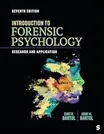
Introduction to Forensic Psychology: Research and Application
Curt R. Bartol, Anne M. Bartol · 2004
A sweeping textbook spanning legal psychology, police and public safety psychology, criminal psychology, victimology, and correctional psychology. The authors weave research findings directly into how psychologists work within the justice system. Case law discussions throughout show how courts have shaped the role of forensic experts.
This is the reference point for a field overview. Students return to it repeatedly for both grounding and specifics. The scope prevents you from oversimplifying what forensic psychology actually covers.
The Psychology of Criminal Conduct
Ronald Blackburn · 1993
Blackburn builds theoretical foundations for why people commit crimes using psychodynamic, cognitive-behavioral, and biological frameworks. He examines individual differences, situational pressures, and how each model explains aspects of criminal behavior differently. This is dense theory work that makes prior assumptions visible.
You can't assess offenders well without understanding what drives behavior. Blackburn teaches you to hold multiple explanatory models at once rather than latching onto one convenient story.
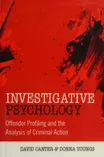
Investigative Psychology: Offender Profiling and the Analysis of Criminal Action
David V. Canter, Donna Youngs · 2007
Canter presents a scientific framework for understanding criminal behavior through the analysis of crime scenes and offender actions. Rather than the armchair theorizing of popular profiling, this approach grounds conclusions in empirical data, geographical patterns, and behavioral consistency. Includes detailed case material and statistical methods.
If you want to understand profiling without the entertainment sensationalism, this book does it. Canter's method is now used in actual police work, making this foundational for contemporary practice.
Wrongful Convictions and Forensic Science Errors: Case Studies and Root Causes
John Morgan · 2023
Morgan examines specific cases where innocent people were convicted because of poor forensic work or faulty psychology testimony. Each case study shows the cascade of errors, how the system missed warning signs, and what would have changed the outcome. Covers false confessions, junk science testimony, and tunnel vision in investigation.
This is essential if you plan to testify in court or sit on expert panels. Knowing how to fail matters as much as knowing how to succeed. The recent publication means these are current cases with today's standards in mind.
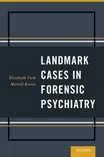
Landmark Cases in Forensic Psychiatry
Elizabeth Ford, Merrill Rotter · 2014
This book presents the legal decisions that shaped what forensic psychologists and psychiatrists can and cannot do in court. Each chapter covers a pivotal case with explanation of the law before and after. Topics include competency, insanity, informed consent, and civil commitment. Includes both criminal and civil proceedings.
You cannot understand the boundaries of your role without knowing the major court rulings. These cases define what evidence is admissible, what qualifications matter, and how judges view expert testimony.
Expert Testimony on the Psychology of Eyewitness Identification
Brian L. Cutler · 2009
Cutler synthesizes decades of research on how witnesses identify people (or misidentify them) in lineups, photo spreads, and courtroom confrontations. He addresses how confidence relates to accuracy, why people make mistakes, and what procedures reduce false identifications. Includes guidance for expert testimony on this specific topic.
Eyewitness misidentification is one of the leading causes of wrongful conviction. As a forensic psychologist, you will likely testify about this or review cases involving identification errors. Cutler gives you the research framework and the testimony language.
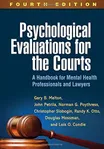
Psychological Evaluations for the Courts, Fourth Edition
Gary B. Melton, John Petrila, Norman G. Poythress, Christopher Slobogin, Randy K. Otto, Douglas Mossman, Lois O. Condie · 2017
A detailed manual for conducting forensic psychological evaluations in criminal and civil cases. Covers competency to stand trial, criminal responsibility, sentencing, civil commitment, and other court-ordered assessments. The book teaches both the legal standards and the practical steps for fair, defensible evaluation.
This is the evaluation clinician's handbook. If you will conduct assessments for courts, this book walks you through the reasoning, the tools, and the ethical decisions you will face.
Whoever Fights Monsters: My Twenty Years Tracking Serial Killers for the FBI
Robert K. Ressler · 1992
Ressler recounts his twenty-five-year career in the FBI's Investigative Support Unit, tracking serial killers and violent offenders. He describes how he and colleagues developed behavioral profiling through interviews with imprisoned killers, then applied these patterns to active investigations. The memoir includes work with Ed Gein, Edmund Kemper, Jerry Brudos, and others.
Ressler pioneered what became modern profiling. Reading his firsthand account shows how criminal psychology was born from investigative necessity, not theory alone. His reflections on what works and what doesn't shape how the field practices today.
From the shelf to the field
Separating the career from the TV version
These books do honest work correcting the profiler fantasy: real forensic psychology is assessment reports, competency evaluations, and expert testimony that survives cross-examination. The career path is equally unglamorous and equally concrete: a doctorate for most roles, plus supervised forensic hours.
This guide to becoming a forensic psychologist maps the degrees, board certification, and where the jobs actually are.
Where to go next
- criminal psychology careers · how it differs from forensic work
- psychology salaries by career · what forensic roles actually pay