
Reading list · 8 books, ranked
The Best Books for Nursing Students
Starting an RN or BSN program means learning clinical skills, pharmacology, and pathophysiology. But it also means preparing for the emotional weight, the time pressure, and the reality of caring for people at their most vulnerable. These eight books give you what textbooks can't: insight from working nurses, frameworks for developing expertise, and honest preparation for what lies ahead.
Updated 2026-07-13
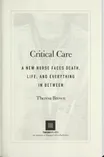
Critical Care: A New Nurse Faces Death, Life, and Everything in Between
Theresa Brown · 2010
Theresa Brown traded her career as an English professor for a stethoscope and spent her first year as a registered nurse in an oncology unit. She walks through her first code, her first patient death, and the chaotic reality of hospital work, where bureaucracy and time management matter as much as clinical knowledge. The book captures the shock of discovering that behind hospital walls, the work is messier, faster, and more humane than most textbooks suggest.
This is the book that shows you what you're signing up for without romanticizing it. Brown's honest voice prepares you emotionally for the demands ahead, and her nursing school perspective makes it feel like a conversation with someone who just walked the path you're entering.
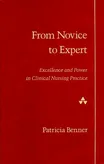
From Novice to Expert: Excellence and Power in Clinical Nursing Practice
Patricia Benner · 1984
Benner built her framework around a central insight: nurses don't become skilled practitioners through memorization or generic rules, but through lived experience with real patients. She uses the Dreyfus Model of Skill Acquisition to map how a nurse progresses from rigid rule-following to intuitive decision-making. The book explores seven domains of nursing practice and illustrates how expertise actually develops in the clinical setting.
This foundational text shapes how nursing programs teach clinical judgment. For students, it offers a roadmap for your own professional growth and explains why, in your first year, you'll feel like you're following protocols, and why that's exactly what you should be doing. It reframes those early struggles as steps toward competence.
Your First Year As a Nurse, Revised Third Edition: Making the Transition from Total Novice to Successful Professional
Donna Cardillo · 2022
Cardillo distills three decades of nursing experience into practical advice for the new graduate: how to find a job that fits your goals, navigate relationships with experienced nurses and physicians, manage your time and emotional energy, and stay sane during the hardest year. She covers common pitfalls like overcommitting, recognizing bullying, building confidence, and knowing when to ask for help.
This is the survival manual you'll want to read right before graduation or your first shift. It doesn't philosophize about nursing; it tells you exactly what to do when you're overwhelmed, how to communicate with different personalities in the unit, and how to protect yourself from burnout. It's like having a mentor in your pocket.
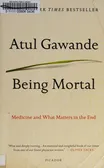
Being Mortal: Medicine and What Matters in the End
Atul Gawande · 2014
A surgeon explores why modern medicine often fails patients at the end of life, and how healthcare providers can shift from prolonging existence to honoring what matters to the person. Through stories of his own family and patients, Gawande shows how clinicians trained to fight death must learn to ask different questions: What trade-offs is the patient willing to make? What gives their life meaning?
Nursing students often focus on acute care and recovery, but you'll care for dying patients too. This book rewires how you think about your role in those moments, from someone tasked with keeping people alive to someone who can help them live well with the time they have left. It's essential preparation for conversations you'll have throughout your career.
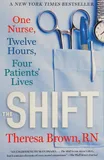
The Shift: One Nurse, Twelve Hours, Four Patients' Lives
Theresa Brown · 2015
Brown takes the reader through a single twelve-hour shift as an oncology nurse, tracking four patients across morning rounds, admissions, discharges, medications, and family conversations. You see the constant reshuffling of priorities, the gaps between intentions and reality, the fear of missing something critical, and the moments of connection that make the job worth it. The book shows nursing as it actually happens, moment by moment.
Many students picture nursing as one patient at a time, one problem at a time. This book demolishes that illusion in the best way. It's a realistic window into the chaos and meaning of a real day, helping you understand time management, emotional regulation, and where the actual satisfactions of nursing come from.
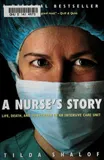
A Nurse's Story: Life, Death and In-Between in an Intensive Care Unit
Tilda Shalof · 2004
Shalof spent more than twenty years in a Toronto ICU and writes from the perspective of nurses who know their patients across weeks and months, watching bodies fail and families cope. The book is raw about death, compassion, burnout, and the dark humor that keeps ICU nurses sane. Characters like Frances from Newfoundland and Justine the union rep bring the unit's culture to life with humor and heart.
If you're drawn to critical care or want to understand the emotional toll of nursing, this memoir is unflinching. It shows that compassion and humor aren't opposites in healthcare; they live together. The book normalizes the feelings you'll have and validates that the people who choose this work are tough, funny, and deeply human.
The Language of Kindness: A Nurse's Story
Christie Watson · 2018
Watson, an NHS nurse for over twenty years, weaves her own nursing journey with stories from patients and colleagues, showing how kindness and skill are inseparable in healthcare. She writes about caring for a man with severe depression, a teen stabbed in violence, a pregnant woman in shock, and the quiet moments of presence that define nursing as much as technical competence. The book spans decades of nursing and reflects on how care itself is an art.
This book reminds you why people become nurses in the first place. Watson writes about the small acts that matter, the relationships that sustain you, and the privilege of being present in people's lives. For students who sometimes wonder if they're choosing the right path, this is affirming and grounding.
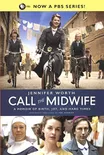
Call the Midwife: A Memoir of Birth, Joy, and Hard Times
Jennifer Worth · 2002
Worth trained as a midwife in 1950s London's East End, where she and other nurses delivered babies in cramped flats, managed complications without modern equipment, and witnessed poverty that shaped every aspect of care. The book is part nursing history, part social history, and part love letter to the resilience of mothers and the practical compassion of midwives learning to work with what they had.
This gives perspective on how far nursing has come and how much of what matters remains unchanged. It shows you that nursing, even in constrained circumstances, is fundamentally about showing up and doing what helps. It's also simply a beautiful read that reminds you this is a profession with deep roots and meaning.
From the shelf to the field
From the reading list to the license
Books like these tell you what nursing feels like: the night shifts, the first code, the patients you carry home in your head. What they cannot tell you is whether an ADN or a BSN fits your life, what the NCLEX actually gates, or what a new grad earns in your state.
When you are ready for that half of the decision, start with how to become a registered nurse, step by step, which covers the degree routes, licensure, and realistic salary numbers behind everything these authors describe.
Where to go next
- ADN vs. BSN: which nursing degree fits · the first fork in every nursing plan
- accelerated BSN programs · the career-changer route, 12 to 18 months
- the highest-paying nursing jobs · where the field pays, specialty by specialty