Reading list · 8 books, ranked
The Best Books for Premed Students
Medicine is more than biochemistry and exam scores. These eight books reveal what physicians actually do, the ethical dilemmas they face, and the personal toll of healing others. Reading them won't prepare you for the MCAT, but they will prepare you for a career where mistakes can be fatal and human connection is the real work.
Updated 2026-07-13
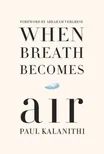
When Breath Becomes Air
Paul Kalanithi · 2016
A young neurosurgeon discovers he has terminal cancer and reflects on what his profession meant to him, what medicine failed to prepare him for, and what matters when life contracts. The book moves between his medical training, the arrogance and beauty of surgery, and his experience as a patient facing his own mortality.
This is the book that drives home what you're actually signing up for. It shows medicine as a calling that demands everything, including your own vulnerability. Premeds often romanticize the role; Kalanithi reveals its weight and its worth.
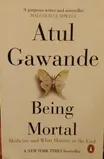
Being Mortal
Atul Gawande · 2014
Gawande returns to the question of what medicine should do when it cannot cure. He examines end-of-life conversations, the limits of treatment, and the gap between what doctors assume patients want and what they actually choose. Through patient stories and his own family, he argues for a different kind of conversation.
This book is essential because it shows that medicine isn't just about extending life. As a premed, you'll need to grapple with what doctors actually owe their patients, especially when science can't save them. Gawande makes ethics concrete and urgent.
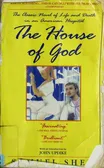
The House of God
Samuel Shem · 1978
A fictionalized account of an intern's year in an intensive care unit, told through black humor, aphorisms, and brutal honesty about patient care, hierarchy, and survival. The narrator and his peers navigate impossible hours, political medicine, and the gap between what they're taught and what actually happens. It's part memoir, part dark comedy, part moral reckoning.
It's controversial and sometimes crude, but it's honest about the strain of medical training in ways sanitized memoirs aren't. Premeds should know that the culture they're entering has real problems, and that recognizing those problems is the first step to changing them.
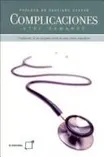
Complications
Atul Gawande · 2002
A surgeon reflects on the cases that went wrong, the ones he learned from, and what it takes to improve. Gawande walks through specific failures, near-misses, and the gaps between training and reality. Each chapter is a story that builds a framework for understanding how experienced clinicians actually prevent and respond to complications.
This book teaches humility about what medicine can know and do. Premeds often arrive thinking medicine is applied science; Gawande shows that it's also applied doubt. Understanding that doctors make mistakes and work with incomplete information is crucial before you take an oath to do no harm.
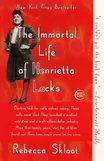
The Immortal Life of Henrietta Lacks
Rebecca Skloot · 2009
Henrietta Lacks was a poor Black woman whose cancer cells were taken without her knowledge in 1951 and became one of medicine's most valuable resources, driving breakthroughs in vaccines, cloning, and genetic research. Her family never benefited and often didn't even know what happened to her cells. Skloot reconstructs Henrietta's life and explores the intersection of race, poverty, medical ethics, and exploitation in American medicine.
Premeds need to understand that medicine's relationship with vulnerable populations has been fraught with harm. This isn't ancient history; the ethical blindness Skloot documents shaped modern medicine's flaws. Reading this prepares you to be the kind of doctor who recognizes injustice when you see it.
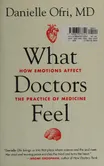
What Doctors Feel
Danielle Ofri · 2013
An emergency physician examines the emotions that shape medical practice: fear, shame, anger, sorrow, and burnout. Ofri moves through her own mistakes and those of colleagues, showing how feelings aren't obstacles to good medicine but central to it. She argues that suppressing emotion in medicine doesn't create objectivity; it creates disconnection and error.
Medical school will teach you to control emotion, but Ofri teaches you to integrate it. Understanding that your frustration with a patient or grief over a death affects your clinical judgment is essential for staying sane and staying ethical. This book normalizes the emotional labor of medicine.
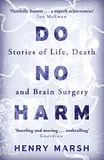
Do No Harm
Henry Marsh · 2014
A British neurosurgeon with four decades of operating experience recounts cases where his judgment had to be precise or someone would be permanently disabled or dead. Marsh doesn't hide his mistakes, his arrogance, or the moments when he had to tell a patient that surgery would likely kill them. The book conveys both the intellectual fascination of neurosurgery and its enormous weight.
Marsh models the kind of physician who grows wiser through experience and honesty about failure. His respect for the fragility of the human brain and the lives that depend on his hands shows what mature medical judgment looks like. It's a corrective to the fantasy of the infallible surgeon.
Thinking, Fast and Slow
Daniel Kahneman · 2011
A Nobel laureate psychologist explains how the human mind makes decisions under uncertainty. Kahneman separates intuition (fast thinking) from deliberation (slow thinking) and shows where each fails, how biases hide, and what patterns we mistake for understanding. The book is dense with experiments and evidence about how we actually judge risk and probability.
This book is included because diagnosis is a cognitive challenge as much as a scientific one. Kahneman's work explains why experienced doctors can miss what should be obvious and why checklists work. Understanding your own thinking biases will make you a more careful, less arrogant physician.