
Reading list · 8 books, ranked
The Best Books for Psychology Students
Built for undergraduates and those headed to graduate programs, this reading list pairs landmark works that shaped modern psychology with recent scholarship that questions what we thought we knew. Start with the foundations, then push past them: this collection includes both the canonical texts you'll see across syllabi and the critical voices asking whether some of psychology's most famous findings actually hold up.
Updated 2026-07-13
Thinking, Fast and Slow
Daniel Kahneman · 2011
A Nobel laureate psychologist explains how the human mind makes decisions under uncertainty. Kahneman separates intuition (fast thinking) from deliberation (slow thinking) and shows where each fails, how biases hide, and what patterns we mistake for understanding. The book is dense with experiments and evidence about how we actually judge risk and probability.
Essential preparation for graduate work in any psychology specialty. This book teaches you to recognize the limits of human rationality without dismissing human thought, grounding you in the cognitive science every psychologist should know.
Behave: The Biology of Humans at Our Best and Worst
Robert M. Sapolsky · 2017
Sapolsky traces behavior across timescales, from the neural firing milliseconds before an action to the evolutionary pressures over millennia that shaped human conduct. He integrates neurobiology, endocrinology, development, and social context to explain why people act the way they do.
For students planning clinical, social, or neuroscience paths, this book is irreplaceable. It models the kind of systems thinking that distinguishes graduate-level psychology from undergraduate survey courses and builds your vocabulary for talking about behavior at multiple levels of analysis.
Man's Search for Meaning
Viktor E. Frankl · 1946
Frankl, a Holocaust survivor and psychiatrist, reflects on his time in Nazi camps and connects his observations to a theory of human motivation. He argues that people can endure extraordinary suffering if they find meaning in their circumstances, and that the pursuit of meaning is the primary human drive.
This slim book teaches you existential psychology and introduces logotheory, a framework that shows up repeatedly in clinical training and informs how therapists work with clients facing despair. It's also a moral anchor, reminding you why psychology matters.
The Lucifer Effect: Understanding How Good People Turn Evil
Philip G. Zimbardo · 2007
Zimbardo examines the Stanford Prison Experiment alongside historical atrocities and everyday examples of moral failure. He argues that ordinary people can commit extraordinary harm when social systems and situations override personal values, and explores how the line between good and evil is thinner than we believe.
A cornerstone of social psychology teaching, this book builds critical thinking about one of psychology's most famous studies while introducing situational and systemic explanations for behavior. For grad school, you need to engage with both its insights and its controversies.
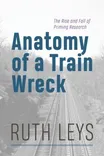
Anatomy of a Train Wreck: The Rise and Fall of Priming Research
Ruth Leys · 2024
Leys chronicles the rise of social priming research, the celebrity status it achieved, and its spectacular failure to replicate. She examines how respected researchers built careers on effects that vanished under scrutiny, and what psychological and institutional factors allowed the field to embrace findings that didn't hold.
This is the book directly addressing pop-psychology's credibility crisis. Before grad school, you need to understand not just what went wrong in priming research, but why even careful scientists can be fooled by their own data. Leys holds the field accountable without dismissing it.
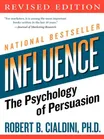
Influence: The Psychology of Persuasion
Robert B. Cialdini · 1983
Cialdini identifies six principles that make people say yes: reciprocity, commitment and consistency, social proof, authority, liking, and scarcity. Through field research and case studies, he shows how these principles operate in sales, marketing, negotiation, and everyday social interaction.
This book is the foundation for applied social psychology. Whether you're interested in clinical work, organizational psychology, or public policy, understanding these principles shapes how you see influence at work in human relationships and institutions.
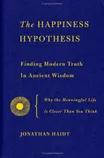
The Happiness Hypothesis: Finding Modern Truth in Ancient Wisdom
Jonathan Haidt · 2005
Haidt synthesizes ancient philosophical traditions with contemporary research in psychology and neuroscience to answer what makes life meaningful. He explores love, virtue, adversity, and purpose, treating ancient wisdom as testable hypotheses rather than outdated ideas.
This book teaches you to read research critically while staying humble about the limits of science. For students considering positive psychology, clinical work, or research on meaning and flourishing, it models how to build a psychology that honors both data and the human search for meaning.
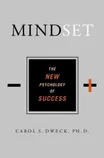
Mindset: The New Psychology of Success
Carol S. Dweck · 2006
Dweck describes two orientations toward ability: a fixed mindset (believing talent is innate and unchangeable) and a growth mindset (believing abilities develop through effort). She traces how these mindsets shape motivation, resilience, learning, and achievement across education, sports, business, and relationships.
Growth mindset research bridges developmental, educational, and social psychology while offering practical tools that show up in clinical and coaching work. Grad programs in educational psychology especially emphasize this framework, and understanding its empirical foundations and controversies prepares you for those debates.
From the shelf to the field
The books open the field; the degree decides where you enter it
Psychology looks like one subject from a freshman lecture hall and turns out to be a dozen careers with very different degrees behind them. A clinician, a school psychologist, and an I/O consultant may have shared one intro course and nothing since.
Before you pick a graduate path because it sounds right, look at the full map of psychology careers and the degree each one actually requires, then come back to the reading with a direction in mind.
Where to go next
- what clinical psychologists actually do · the doctorate-level clinical route
- psychology salaries by career · real numbers across the whole field
- I/O psychology careers · the business-side path nobody tells undergrads about