
Reading list · 8 books, ranked
The Best Books for Social Work Students
Social work requires understanding how trauma shapes lives, how systems trap people in cycles of poverty, and how to show up with wisdom and compassion in messy, real situations. These eight books teach you what textbooks leave out. You'll find stories from the field, research on how brains heal from injury, accounts of injustice that demand your advocacy, and practices for staying sane while doing hard work.
Updated 2026-07-13
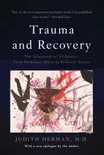
Trauma and Recovery: The Aftermath of Violence - From Domestic Abuse to Political Terror
Judith Lewis Herman · 1992
Herman presents a model for understanding how trauma affects survivors and outlines the stages of recovery, drawing from her work with Vietnam veterans and survivors of domestic violence. She explains how traumatized people are disconnected from themselves and their relationships, and how healing requires reconnection through safety, remembrance, and reconnection to community.
This is the foundational text for understanding trauma-informed practice. Every social worker needs Herman's framework; it shapes how you listen to clients and design interventions that honor their capacity to heal.
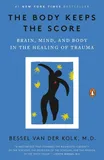
The Body Keeps the Score: Brain, Mind, and Body in the Healing of Trauma
Bessel van der Kolk · 2014
Van der Kolk synthesizes decades of neuroscience research on how trauma changes the brain's stress response systems, affecting attention, emotion regulation, and threat detection. He explains why talk therapy alone often fails for traumatized people and describes somatic approaches like yoga, movement, and drama that reconnect people to their bodies and regulate their nervous systems.
This book teaches you the neuroscience behind why your clients behave the way they do. You'll understand why a client freezes in stress, why their body remembers what their mind forgets, and how to recommend treatments that actually address trauma's physical roots.
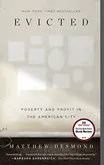
Evicted: Poverty and Profit in the American City
Matthew Desmond · 2016
Desmond spent years in Milwaukee following eight families as they fought to keep shelter. He documents how they lost homes not because of personal failures but because rent consumed half their income. The book traces the machinery of eviction itself, showing how it works as a poverty machine.
This book transforms how you understand poverty. You'll see that individual failure is not the issue; the system is designed to displace and impoverish. Desmond's stories of real families make clear why housing justice belongs at the center of social work.
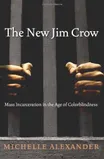
The New Jim Crow: Mass Incarceration in the Age of Colorblindness
Michelle Alexander · 2010
Alexander, a civil rights lawyer, argues that mass incarceration functions as a caste system. The War on Drugs targeted Black communities, creating a legal mechanism for permanent exclusion from work, housing, and voting. The book connects criminal justice to poverty directly.
If you work with clients in or near the criminal justice system, this book is non-negotiable. Alexander shows you the systemic forces your clients face and why individual counseling alone cannot address their real problems. Her analysis equips you to advocate for policy change.
The Boy Who Was Raised as a Dog: And Other Stories from a Child Psychiatrist's Notebook
Bruce D. Perry, Maia Szalavitz · 2006
Perry shares case studies from his work treating profoundly neglected and traumatized children. Through detailed stories, he shows how abuse shapes the developing brain and how consistent, compassionate relationships can reverse that damage. The book bridges neuroscience and human connection.
Social workers often serve children who have been severely hurt. Perry's cases teach you what healing actually looks like and why patience, presence, and routine matter more than any intervention. His work validates strength-based practice grounded in neuroscience.
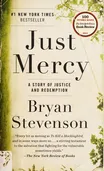
Just Mercy: A Story of Justice and Redemption
Bryan Stevenson · 2014
Stevenson recounts his years defending people on death row and others failed by the criminal justice system, focusing on cases of children tried as adults and people executed for crimes they did not commit. His stories show how lawyers and advocates stop injustice one client at a time.
This memoir is a call to action. Stevenson's voice stays with you. You will meet people your field has written off and see why advocacy, not judgment, is social work's job. The book shows how individual cases connect to broader systemic failure.
Trauma Stewardship: An Everyday Guide to Caring for Self While Caring for Others
Laura van Dernoot Lipsky · 2009
Lipsky addresses the cost of caring for traumatized people. She introduces the concept of trauma stewardship, teaching readers how to recognize and respond to the effects of secondary trauma, including burnout, cynicism, and numbness that caregivers often experience.
Social work burns people out. Lipsky's framework helps you stay present and effective over a career. Her work acknowledges that exposure to others' trauma shapes you and offers concrete practices for renewal and grounding. This book is not self-care as luxury; it is survival.
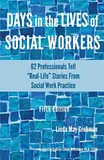
Days in the Lives of Social Workers: 62 Professionals Tell Real-Life Stories From Social Work Practice
Linda May Grobman · 2019
Grobman collects short narratives from 62 social workers across different settings. case managers, school social workers, hospice workers, and others share their daily challenges, triumphs, and the moments when their practice actually changed a life.
This book shows you the range of paths in social work and the real-world wisdom practitioners carry. You will find stories that match your interests or surprise you with new possibilities. Most importantly, you will hear from people like you who chose this work and kept doing it.
From the shelf to the field
From theory to field placement
The books here show social work at its widest: systems, poverty, trauma, practice wisdom. The profession funnels most of that breadth through one credential, the MSW, and for anyone aiming at therapy work, the clinical license that follows it.
This guide to the clinical social work career path covers what the LCSW adds, what it pays, and the supervised hours between graduation and independent practice.
Where to go next
- compare MSW programs · accredited programs side by side
- is a BSW worth it? · the undergraduate question, answered with data
- macro, mezzo, and micro social work · the three scales of the profession