
Reading list · 8 books, ranked
The Best Books for Therapists in Training
These eight books form the foundation for counseling and therapy grad students who want to understand both the relational craft of therapy and the theories that underpin it. Drawn from practitioners and theorists who center the therapist's own growth, these works move beyond technique toward what it actually feels like to sit with another person through their suffering. Each one assumes you are becoming someone new in this work, not just learning a skill.
Updated 2026-07-13
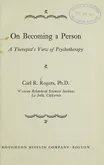
On Becoming a Person
Carl Rogers · 1961
Rogers describes what happens when therapy is built on empathy, genuineness, and unconditional positive regard rather than expert authority. He shows how the therapist's specific way of being creates conditions where clients can grow and change. The book is grounded in Rogers' decades of clinical observation and argues that growth happens in relationship, not through intervention.
Every modality you study later rests on some version of what Rogers articulated here about the therapeutic relationship. Reading Rogers early means you have solid ground to stand on when theory gets technical.
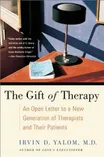
The Gift of Therapy
Irvin D. Yalom · 2002
Yalom offers eighty-five brief chapters of advice drawn from thirty-five years of practice, each one a single observation about how to work with clients. He writes about presence, curiosity, authenticity, mistakes, self-disclosure, and what it takes to help someone change. This is not theory building but the actual wisdom a master clinician wants beginning therapists to carry with them.
This book answers the question: what do I actually do when I'm sitting across from someone? Yalom shows that the craft matters as much as the theory, and that good therapy flows from how you listen and who you become in the room.
On Being a Therapist
Jeffrey A. Kottler · 1986
Kottler writes with candor about the internal experience of being a therapist: the self-doubt, the fatigue, the ways clients change you, the errors you make and learn from. He explores what therapists often feel but rarely discuss in professional settings. The book treats the therapist's own growth and vulnerability as central to the work, not tangential.
You need permission to admit that becoming a therapist is disorienting and humbling. Kottler gives you that permission and shows that your confusion and worry are not signs you're failing but signs you're awake to what the work demands.
Existential Psychotherapy
Irvin D. Yalom · 1980
Yalom organizes existential psychotherapy around four ultimate concerns: death, freedom, isolation, and meaninglessness. He integrates European existential philosophy with practical clinical techniques, showing how patients unconsciously defend against awareness of these realities and how therapy can help them develop more adaptive responses.
Understanding existential theory gives you a framework for why people actually come to therapy and what real change looks like. This book teaches you to hear the existential dimension in what clients bring you.
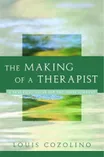
The Making of a Therapist
Louis Cozolino · 2004
Cozolino writes specifically for grad students and early practitioners, walking through the actual phases of learning: getting through your first sessions, understanding clients, and understanding yourself. He weaves neuroscience, attachment theory, and his own early experiences as a therapist into a narrative about how you become someone who can hold another person's pain. The book treats the therapist's development as a prerequisite to effective work.
This book speaks directly to your experience as a student. It validates the confusion you feel while showing you that confusion is exactly what develops clinical wisdom. Cozolino teaches that knowing yourself is not separate from technique but foundational to it.

Love's Executioner
Irvin D. Yalom · 1989
Yalom presents ten complete cases from his own practice, showing how therapy actually unfolds with real clients over time. Each case is written as narrative: you hear his thinking, see his mistakes, follow the turns the relationship takes. The book reveals the craft of therapy in action, the way a skilled clinician follows the client and adapts, the moments where something shifts.
Reading real cases teaches you more than abstract principles because you see how theory meets a particular human being in a particular moment. These cases show Yalom thinking and working in real time.
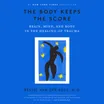
The Body Keeps the Score
Bessel van der Kolk · 2014
Van der Kolk explains how trauma rewires the brain and nervous system, living in the body rather than only in memory. He describes how traditional talk therapy alone can miss this embodied dimension and explores somatic approaches (yoga, neurofeedback, movement, art). The book translates neuroscience into clinical understanding of how past experiences shape present functioning.
Many clients walking into your office carry trauma written into their nervous systems. This book teaches you to recognize how past events inhabit the body and gives you frameworks for working with that reality.
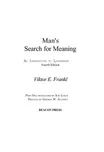
Man's Search for Meaning
Viktor E. Frankl · 1946
Frankl, a Holocaust survivor and psychiatrist, reflects on his time in Nazi camps and connects his observations to a theory of human motivation. He argues that people can endure extraordinary suffering if they find meaning in their circumstances, and that the pursuit of meaning is the primary human drive.
Clients come to therapy searching for meaning, and you need to understand why that search matters more than symptom relief alone. Frankl teaches that meaning is what transforms suffering from crushing to bearable.
From the shelf to the field
Yalom makes you want the chair; licensure decides how you get it
What none of these books settle is the credential question, because the authors sit on different sides of it: psychiatrists, psychologists, counselors, social workers, all doing therapy through different licenses with different scopes and price tags.
This overview of counseling careers and the licensure paths behind them untangles LPC from LMFT from LCSW before you commit to the wrong graduate program for the work you want.
Where to go next
- can you be a therapist with an MSW? · the social work route into the chair
- clinical psychology careers · the doctorate route, honestly costed
- clinical social work careers · the LCSW route most people overlook