
Reading list · 8 books, ranked
The Best Medical Memoirs
These memoirs capture medicine from inside, written by people who have lived the work. You'll find surgeons who became patients and learned about their own mortality, nurses who show what care actually demands, paramedics who work the streets where medicine begins, and emergency doctors facing the limits of the system. They're honest about what works and what fails, written without the distance of textbooks or the gloss of inspiration. This is medicine as it actually is.
Updated 2026-07-13
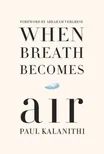
When Breath Becomes Air
Paul Kalanithi · 2016
A young neurosurgeon discovers he has terminal cancer and reflects on what his profession meant to him, what medicine failed to prepare him for, and what matters when life contracts. The book moves between his medical training, the arrogance and beauty of surgery, and his experience as a patient facing his own mortality.
This is the gold standard because Kalanithi occupied both positions at once: the one giving care and the one receiving it with uncertainty. His prose is exceptional, and he grapples with medicine's deepest questions without sentimentality or false resolution.
Being Mortal
Atul Gawande · 2014
Gawande returns to the question of what medicine should do when it cannot cure. He examines end-of-life conversations, the limits of treatment, and the gap between what doctors assume patients want and what they actually choose. Through patient stories and his own family, he argues for a different kind of conversation.
This book reshaped end-of-life practice in hospitals. Gawande asks the human questions surgeons often avoid, and he does it with data and specificity, not ideology. It belongs here because he shows surgery's limits and asks what medicine should actually do.
Do No Harm
Henry Marsh · 2014
A British neurosurgeon with four decades of operating experience recounts cases where his judgment had to be precise or someone would be permanently disabled or dead. Marsh doesn't hide his mistakes, his arrogance, or the moments when he had to tell a patient that surgery would likely kill them. The book conveys both the intellectual fascination of neurosurgery and its enormous weight.
Marsh's willingness to own his failures is rare in surgeon memoirs. He shows accountability and doubt, not just technical skill. This is the most realistic account of what surgical practice actually costs and how surgeons navigate irreversible choices.
This is Going to Hurt
Adam Kay · 2017
A junior doctor in the British National Health Service documents a decade of obstetrics through 'secret diary' entries. Kay captures the reality of residency: exhaustion, impossible patient loads, impossible choices, and gallows humor keeping people sane. He writes about the moments when training meets actual human vulnerability and the cost of that collision.
This book shows medicine through someone still learning, not yet seasoned. Kay's voice is contemporary and irreverent, making the memoir accessible to readers who find older surgeon narratives less relatable. It fills a gap by showing training-year medicine from inside.
The Language of Kindness
Christie Watson · 2018
A nurse who worked in intensive care and other acute settings tells stories of patients, families, and the invisible emotional labor that nursing demands. Watson shows what nurses know and see that doctors often don't. She argues that kindness in nursing is not sentiment but practical skill, the difference between patients surviving and thriving.
This is essential because the list needed nursing perspective, not just surgical heroics. Watson's voice carries the authority of someone who has held patients' hands through their worst moments and understands care as daily, unglamorous work. Nurses rarely get their own narratives.
The Beauty in Breaking
Michele Harper · 2020
An emergency room physician reflects on decades in under-resourced urban hospitals. Harper writes about patients who have nowhere else to go, what it means to practice medicine as a Black woman in a system not built for either population, and how trauma echoes through both patients and providers. She examines medicine's structural failures and the possibility of healing within broken systems.
Harper brings perspective usually missing from medical memoirs: structural inequity shaping outcomes. Her reflections on medicine's limitations and her own resilience make this book urgent. She shows what emergency medicine looks like outside the prestigious hospital narrative.
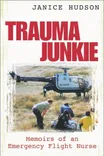
Trauma Junkie
Janice Hudson · 2001
Hudson was a flight nurse in emergency transport, dispatched into crisis situations before patients reach the hospital. She writes about helicopter rescues, car accidents, cardiac events, and the human cost of working in perpetual emergency. Her stories are immediate and visceral, showing medicine at its most chaotic and improvised.
This book captures the paramedic and emergency nursing world that most medical memoirs ignore. Hudson's stories are edge-case medicine, but they reveal what happens when protocols collide with reality and improvisation becomes the only option. She shows the first moments of crisis.
A Thousand Naked Strangers
Kevin Hazzard · 2016
Hazzard worked as a paramedic in urban ambulances, responding to calls across the city for years. He recounts overdoses, assaults, sudden deaths, and the people no one else is paying attention to. The memoir is unsentimental about addiction, poverty, and violence, and about the paramedics who show up anyway, night after night, to people in their worst moments.
This rounds out the list with street-level medicine: the paramedic's perspective of what happens before the hospital, in neighborhoods where ambulances are as familiar as police. Hazzard's understanding of addiction and social collapse is grounded in direct experience, not theory.