
Reading list · 8 books, ranked
The Best Photography Books
Printed photographs that last. These eight books hold up because they capture something true about how we see the world. A shelf of monographs and collections from photographers who shaped the form itself. Books for anyone who wants to own a piece of visual history.
Updated 2026-07-13
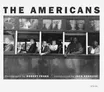
The Americans
Robert Frank · 1959
Frank traveled across the United States in the 1950s with his camera, gathering images that became this landmark collection. What he found was not the glossy postcard version of America but something raw and honest: diners, street corners, car interiors, and faces of ordinary people. The book opens with text by Jack Kerouac and includes 83 photographs that changed how photographers thought about their subject.
This book invented the modern photo book. It proved that a sequence of photographs could tell a story without words, and that beauty lived in overlooked places. Every serious photographer building a collection starts here.
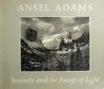
Yosemite and the Range of Light
Ansel Adams · 1979
Adams spent decades photographing the Sierra Nevada, refining his craft in the granite valleys and alpine peaks he loved. This 1979 book gathers his finest landscapes, printed with the precision he spent his life perfecting. The photographs move from intimate details of rock and water to vast alpine vistas. Each image shows his commitment to technical mastery and his belief that photography could be as expressive as painting.
If you own one landscape photography book, this is it. Adams' technique and philosophy define how we see black and white nature photography. The prints are monumental and humbling.
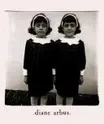
Diane Arbus
Diane Arbus · 1972
Published after Arbus's death, this Aperture monograph introduced her portraits to the world. She photographed sideshow performers, transgender people, children, and everyday New Yorkers with unflinching directness. Her subjects stare back at the camera with a strange honesty. The photographs don't judge or explain. They simply say: here is a person, fully themselves.
Arbus redefined what a portrait photograph could be. She saw beauty and strangeness in people others looked past. This book remains unsettling and necessary, proof that photography's power lies in attention, not flattery.
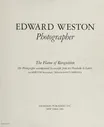
Edward Weston: The Flame of Recognition
Edward Weston · 1965
A career-spanning look at Weston's six decades of photography, from early soft-focus work through his celebrated close-ups of vegetables, nudes, and driftwood. The book pairs his images with excerpts from his daybooks, where he wrestled with what photography meant to him. His progression from pictorialism to sharp-focus formalism shows an artist constantly questioning his own work.
Weston's still-life photographs are among the most formally perfect images ever made. This book shows why he mattered: not because he invented rules but because he mastered form itself, finding infinite complexity in simple subjects.
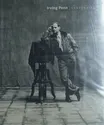
Irving Penn Centennial
Maria Morris Hambourg · 2017
This retrospective, published on Penn's 100th birthday, draws from nearly 70 years of his work. Penn's studio portraits, fashion photographs, and still-life work appear alongside lesser-known experiments and recently discovered prints. The scale is immense. Photographs of Marlene Dietrich, Audrey Hepburn, and countless others sit beside his botanical studies and tribal portraits. Every image demonstrates his obsession with light, shadow, and the geometry of the frame.
Penn proved that fashion and portraiture photography could be high art through nothing but discipline and vision. His studio was his laboratory. This book is a masterclass in seeing light.
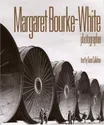
Margaret Bourke-White
Margaret Bourke-White · 1998
Bourke-White was a photojournalist before the term existed, documenting industrial America, the Soviet Union, and the aftermath of World War II. This collection brings together her most powerful images from across her career. You see her work from factory floors, refugee camps, and war zones. Her photographs carry moral weight without becoming sentimental. She photographed history as it happened and asked viewers to bear witness.
Bourke-White showed that photography could matter politically and socially while remaining beautiful. Her compositional sense was exquisite, even when her subject was tragedy. For anyone interested in photography's role in journalism and activism, this book is foundational.
Solitude of Ravens
Masahisa Fukase · 1991
Fukase photographed ravens for years, following them through seasons and years until this obsession became a kind of meditation. The black birds move through snow, bare branches, and water in images of extraordinary quietness. There's no narrative, no story to learn. Instead, the book is a sustained look at form, light, and the repeated gesture of a photographer returning to the same subject again and again. It's less a book about birds than about attention.
This book proves that photography doesn't need variety or novelty. One subject, seen from infinite angles and contexts, can become profound. Ravens belongs on shelves alongside art books, not just photography books.
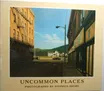
Uncommon Places
Stephen Shore · 1982
Shore photographed American roadsides, parking lots, motels, and storefronts in color film at a time when color was dismissed as commercial and gaudy. His photographs show gas stations and roadside shops with the same formal attention a landscape painter gives to mountains. Trivial subjects become monumental through composition and light. The book argues silently for beauty in the ordinary and overlooked.
Shore's work was crucial in proving that color photography was art, not just advertising. His eye for structure and his patience with everyday subjects opened doors for generations of photographers who found poetry in the mundane.