
Reading list · 8 books, ranked
The Best Psychological Thrillers
If you want a thriller that lives in the brain, not the body count, this list is for you. These eight books trade jump scares for the slow churn of dread, twisted logic, and narrators you can't quite trust. From the prototype that made them all possible to boundary-pushing modern takes, here are the books that prove the darkest threats wear ordinary faces.
Updated 2026-07-13
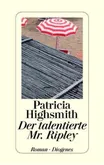
The Talented Mr. Ripley
Patricia Highsmith · 1955
Tom Ripley is a small-time hustler in New York who gets hired to travel to Italy and convince a wealthy man's son to come home. Once there, Ripley becomes obsessed with Dickie Greenleaf's effortless charm and privileged life. When Dickie loses interest in him, Ripley devises an elegant solution: he will become Dickie, down to the details of his identity and bank account.
Highsmith engineered the blueprint for every psychological thriller that followed. Ripley isn't sympathetic or evil, he's fascinating. Watching him lie, scheme, and rationalize his way through life is hypnotic, and Highsmith never tips her hand about who the reader should root for. Decades later, this still feels radical.
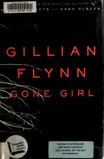
Gone Girl
Gillian Flynn · 2011
Nick Dunne wakes up on his wedding anniversary to find his wife Amy missing. Police and media swirl around him, and through diary entries, we learn Amy was no angel either. This dual-perspective narrative tears apart the myth of the perfect marriage by revealing exactly how much poison can live in a comfortable home.
Flynn pioneered the domestic thriller for a generation and proved that the unreliable narrator trick still worked when done with precision. Neither Nick nor Amy is likable, yet the book is impossible to put down. It's a master class in plotting that rewards close reading because almost nothing is what it first appears to be.
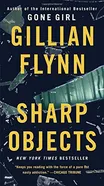
Sharp Objects
Gillian Flynn · 2006
Camille Preaker, a damaged journalist fresh out of a psychiatric hospital, returns to her hometown to cover two girl murders. She's haunted by the small town's ugliness, her family's dysfunction, and her own scars, both literal and psychological. The deeper she digs, the less clear it becomes whether she's tracking a killer or her own ghosts.
Flynn's debut is nastier and less playful than Gone Girl, built from genuine dread rather than twist mechanics. Camille's self-harm and her fractured relationship with her family create a kind of domestic horror that has nothing to do with jump scenes. The small-town Southern Gothic atmosphere curdles into something truly unsettling.
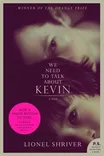
We Need to Talk About Kevin
Lionel Shriver · 2003
Eva Khatchadourian writes letters to her estranged husband about their son Kevin, who committed a school massacre. But these aren't confessions, they're a mother's reckonings with a child she never wanted, a marriage that curled up and died, and the question of how much of a tragedy we can blame on parenting, temperament, or just fate. The horror builds backward from an act to the person who birthed him.
Shriver asks the question no thriller dares to properly: what if the villain isn't born, he's just indifferent? The epistolary form lets Eva reveal her own complicity and selfishness while asking readers to sit with her moral confusion. It's a book about one terrible act, but it's really about the corrosion that happens in a family long before the violence.
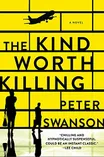
The Kind Worth Killing
Peter Swanson · 2015
At a Heathrow airport bar, two strangers bond over secrets. Ted wants to kill his unfaithful wife. Lily, a beautiful archivist, says she can help. What Ted doesn't know is that Lily has made a career of dispassionate murder. What Lily doesn't know is that Ted has his own agenda. Their alliance spirals into a game of deception where both players are willing to kill to stay ahead.
Swanson wears his debt to Highsmith and Patricia Highsmith's Strangers on a Train proudly, but he adds a contemporary twist: dual unreliable narrators who are equally competent and equally ruthless. The book punishes both of them for what they've done and what they want, with no redemption in sight. It's a masterclass in how to make two terrible people completely absorbing.
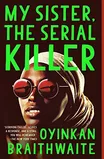
My Sister, the Serial Killer
Oyinkan Braithwaite · 2018
Korede is a nurse in Lagos with a secret: her sister Ayoola has killed three boyfriends, each time claiming self-defense. And each time, Korede has cleaned up the evidence. When Ayoola targets another man that Korede feels protective of, Korede's loyalty collides with her conscience. The story spirals backward through their past and forward into the question of how much you can forgive someone because they're family.
Braithwaite pulls off a rare feat: she makes a book about serial murder both darkly funny and psychologically acute. Korede's voice is sharp and confused at once. Her simultaneous love for and resentment toward her sister creates a moral texture that most thrillers never touch. It's a book about loyalty, complicity, and the cost of looking away.
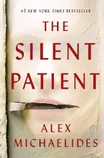
The Silent Patient
Alex Michaelides · 2018
Alicia Berenson, a famous painter, shoots her husband five times and then refuses to speak again. Theo Faber, a criminal psychotherapist, becomes obsessed with uncovering why she committed murder. He manipulates his way into her secure psychiatric facility, convinced that understanding Alicia is the key to understanding himself. But therapy is a game where both the patient and the therapist can be lying.
Michaelides builds an entire book on the trap of transference and projection. Theo's interpretation of Alicia's silence becomes his own obsession, and readers follow along, filling in blanks exactly as he does. The final reveal recontextualizes everything without feeling cheap. It's a reminder that what we see in another person says as much about us as it does about them.
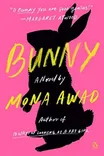
Bunny
Mona Awad · 2019
Samantha is a scholarship student in an elite MFA program surrounded by a clique of women who call themselves Bunny. They're saccharine, disturbing, and hypnotic. Samantha keeps her distance until she's pulled into their circle, and what begins as strange bonding rituals evolves into something unhinged. The line between reality and delusion warps until neither Samantha nor the reader can say what's actually happened.
Awad refuses to make the book easy. Bunny works as a critique of toxic friendships, dark academia, and artistic ambition, but it also works as a descent into psychological unraveling. The prose style mirrors Samantha's fractured consciousness. It's experimental without being unreadable, and it creates a world of dread that feels more like a fever dream than a traditional plot. For readers tired of the procedural thriller formula.