
Reading list · 8 books, ranked
The Best True Crime Books
True crime writing at its best is investigative journalism, not tabloid sensationalism. These books prioritize reporting depth and narrative skill. From Truman Capote's pioneering work through today's finest writers, they all share one thing: meticulous research and respect for both victims and readers who demand more than shock value.
Updated 2026-07-13
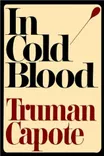
In Cold Blood
Truman Capote · 1965
Capote's account of the 1959 quadruple homicide of the Clutter family in Kansas reads like a novel but stands on exhaustive reporting. He spent years interviewing the killers, investigators, and townspeople, reconstructing the crime and its aftermath with cinematic precision. The book invented what we now call narrative nonfiction.
This is where modern true crime began. It proved that rigorous journalism could have the emotional impact of fiction, and it set the standard for everything that followed. Any serious reader of the genre has to start here.
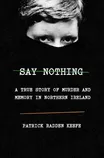
Say Nothing
Patrick Radden Keefe · 2018
Keefe investigates the 1972 disappearance of Jean McConville during the Northern Ireland conflict. A mother of ten vanished, and for decades, no one would say what happened. Through interviews with IRA members, family members, and former intelligence operatives, Keefe reconstructs not just one murder but the moral collapse that made such a killing possible.
This is the best true crime writing of the modern era. Keefe brings Capote's rigor to a political killing, handling the complexity without simplifying the violence. It's journalism that asks hard questions about how good people participate in atrocities.
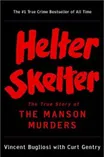
Helter Skelter
Vincent Bugliosi · 1974
Bugliosi, the prosecutor who convicted Charles Manson, takes readers through the investigation and trial of the Manson family murders from the inside. He lays out how the killings were planned, how evidence was gathered, and how he built the case against one of America's most infamous criminals. It's both a crime story and a courtroom procedural.
This is essential because Bugliosi writes as someone who actually worked the case. His perspective differs from Capote's because he's not a journalist observing from outside but a lawyer presenting evidence. Together with In Cold Blood, it forms the foundation of the genre.
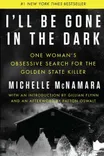
I'll Be Gone in the Dark
Michelle McNamara · 2018
McNamara spent years pursuing the identity of the Golden State Killer, a serial rapist and murderer who terrorized California in the 1970s and 80s before disappearing. Her obsessive research became a book, then a cultural phenomenon, that finally helped authorities identify and arrest him. The narrative weaves her investigation with the stories of victims and her own deepening fixation.
McNamara shows what investigative true crime looks like when a private citizen pursues justice where official channels stalled. Her work proves that journalism quality matters more than institutional access, and her genuine passion for the victims' stories keeps the book human rather than exploitative.
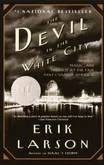
The Devil in the White City
Erik Larson · 2003
Larson braids together two stories from the 1893 Chicago World's Fair. One is about Daniel Burnham, the visionary architect designing the fair itself. The other is about H. H. Holmes, a con artist and serial killer who built a hotel near the fairgrounds and lured victims inside. The beauty of the fair and the horror of the murders create an unsettling contrast.
This book teaches you how to write about crime with style and context. Larson doesn't sensationalize Holmes; he places him in a real moment in history, using the fair as a character itself. The journalism is pristine, but the narrative craft is what makes this a masterpiece of the form.
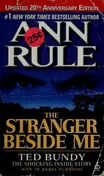
The Stranger Beside Me
Ann Rule · 1980
Rule knew Ted Bundy before he was convicted. They worked together at a suicide hotline, and she didn't realize her friendly coworker was one of America's worst serial killers until his arrest. This book is her firsthand account of that double life, mixed with courtroom testimony and interviews with survivors and investigators.
Rule brings something no other true crime writer could: personal experience alongside professional reporting. She's not just documenting Bundy's crimes, she's grappling with the fact that she was fooled by someone she trusted. That personal stake makes the investigation more rigorous, not less.
Devil at His Elbow
Valerie Bauerlein · 2024
Bauerlein explores the stunning fall of Alex Murdaugh, a prominent South Carolina lawyer whose career collapsed after his wife and son were murdered. The book moves between Murdaugh's family history, his crimes, and the investigation that caught him. Bauerlein pieces together financial fraud, lies to police, and the decision to kill his own family.
This is the gold standard for recent investigative true crime. Bauerlein did original reporting on a case that consumed cable news, but she adds reporting depth that television never could. She shows how wealth and privilege corrupted a family across generations.
The Man No One Believed
Joshua Sharpe · 2025
Sharpe reexamines a 1985 double murder in a rural Georgia church. The original investigation was flawed and corruption ran deep. Decades later, Sharpe conducts hundreds of interviews, tracking down new evidence and showing how a botched investigation meant the wrong people bore suspicion for years. It's a story about what happens when nobody listens.
This book proves that great true crime writing isn't just about famous cases. Sharpe's journalism reveals systemic failures in how we investigate crime in small towns and rural America. His work adds to the broader conversation about who gets believed and who gets justice.