
Author guide
Andrew S. Grove
Andrew Grove was Intel's third employee and served as the company's first chief operating officer and president before becoming CEO from 1987 to 1998. During his tenure as chief executive, he transformed Intel from a struggling memory chip manufacturer into the world's dominant maker of microprocessors, growing market capitalization from $4 billion to $197 billion. His leadership during the industry transition from DRAM to x86 processors stands as one of the most consequential strategic pivots in computing history.
Grove's influence extended far beyond Intel's walls. In 1997, Time magazine named him Person of the Year, recognizing him as the executive most responsible for the exponential growth in microchip power and innovation. He pioneered the Objectives and Key Results (OKR) management framework, a methodology later adopted by Google and countless other organizations. After stepping down as CEO, he served as chairman until 2004 and remained active as a Stanford lecturer and strategic advisor.
A Hungarian-born immigrant who survived the Holocaust as a child, Grove brought a hardened pragmatism to business that permeated everything he wrote and taught. His management philosophy combined rigorous analytics with a clear-eyed view of competitive threats, making him a rare executive who could bridge the gap between technical depth and business acumen. His books remain widely read across industries for their distilled wisdom on strategy, operations, and leadership under uncertainty.
Where to start, in order
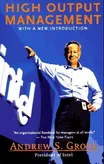
High Output Management
Andrew S. Grove · 1983
This foundational management guide explains Grove's philosophy of running a business through a structured approach to operations, meetings, and decision-making. The book uses specific frameworks, from staff meetings to how to evaluate manager effectiveness, grounded in Grove's two decades at Intel. It treats management as an engineering problem with measurable inputs and outputs.
Start here to understand Grove's mental model for how organizations actually function. This book teaches practical systems that have influenced countless tech leaders and remains refreshingly concrete in a field often dominated by vague platitudes.
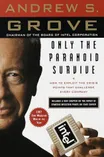
Only the Paranoid Survive
Andrew S. Grove · 1996
Grove explores how companies navigate what he calls a 'strategic inflection point,' a moment when the competitive landscape shifts so fundamentally that the old business model becomes obsolete. He draws from Intel's near-death experience when Japanese memory chip manufacturers nearly destroyed the company, and how the decision to pivot entirely toward microprocessors saved it. The book offers no false comfort, presenting strategic change as both necessary and perpetually threatening.
This is Grove's most famous work and for good reason. It explains how to recognize when your industry is in genuine peril and what courage it takes to cannibalize your own success. Every executive facing disruption should grapple with these ideas.

One-on-one with Andy Grove
Andrew S. Grove · 1988
This slim volume captures Grove in conversation, answering questions about management challenges, career moves, and strategic thinking. It reads more like a series of interviews than a traditional business book, offering Grove's direct voice on topics ranging from how to motivate people to why companies stagnate. The format makes his ideas more accessible while maintaining their intellectual rigor.
If you find his formal writing too dense, this conversational format softens the material without diluting the insight. It's also quick enough to read in a few sittings while still delivering real value.

Swimming Across: A Memoir
Andrew S. Grove · 2001
Grove recounts his life from childhood in war-torn Hungary, through his escape from both Nazi and Soviet occupation, to his arrival in America and eventual rise at Intel. The book reveals how survival instinct shaped his competitive ruthlessness and why he believed in constant vigilance. It provides the personal context for understanding his management philosophy and strategic thinking.
Understanding Grove's background explains the 'paranoia' in his business philosophy. This memoir shows how his early experiences of instability and loss translated into corporate practices. It's essential reading for anyone who wants to understand the man behind the management theories.
Strategy Is Destiny: How Strategy-Making Shapes a Company's Future
Andrew S. Grove · 2002
Grove and Stanford professor Robert Burgelman collaborate to examine how strategy emerges not just from top-down planning but from the cumulative decisions of middle managers navigating market pressures. Using Intel's history as a primary case study, they show strategy as a dynamic process shaped by internal politics, resource allocation, and competitive forces. The book introduces a framework for understanding how strategic direction actually gets set in complex organizations.
This moves beyond Grove's earlier works into academic territory, revealing the mechanisms by which companies actually change direction. It's best approached after reading his earlier books, as it assumes you understand his foundational ideas.

Strategic Dynamics: Concepts and Cases
Andrew S. Grove · 2005
This comprehensive textbook systematizes the lessons from Grove's career into a framework for strategic management, expanded to include case studies from multiple companies beyond Intel. It presents strategy as an ongoing process of adaptation and realignment rather than a fixed plan set from above. The book combines Burgelman's academic rigor with Grove's practical experience to create a resource for students and practitioners alike.
This is the deepest and most technically demanding of Grove's works, appropriate for those seeking a rigorous framework for thinking about strategy. It's useful primarily for managers actively grappling with strategic choices in their own organizations.