
Author guide
Bernard E. Trainor
Lieutenant General Bernard E. Trainor served 39 years in the U.S. Marine Corps, holding both command and staff positions before retiring to pursue military journalism and strategic analysis. From 1986 to 1990, he worked as chief military correspondent for The New York Times, covering significant military operations across Central America and Africa. His front-row observations of modern warfare shaped his distinctive voice as a chronicler of U.S. military strategy and decision-making.
After his tenure at the Times, Trainor became director of the National Security Program at Harvard University's Kennedy School of Government, then joined the Council on Foreign Relations as a Senior Fellow focused on national security issues. He brought both a general's operational knowledge and a journalist's investigative rigor to understanding America's military decision-making. Until his death in 2018, he remained a respected voice on military affairs, frequently appearing on NBC and MSNBC during major international conflicts.
Where to start, in order
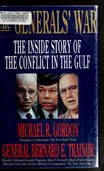
The Generals' War
Bernard E. Trainor · 1995
This book provides an insider's view of how the 1991 Persian Gulf War was planned and executed from the Pentagon through the field commands. Drawing on classified documents and extensive interviews with senior military and political leadership, the authors reveal the tensions between generals like Colin Powell and Norman Schwarzkopf and their civilian overseers. The narrative exposes how military strategy shaped an operation that achieved tactical victory but failed to remove Saddam Hussein from power.
Start here to understand how Trainor bridged military expertise with investigative journalism, creating a model for his later works. This book established the foundation for how he would approach military history, relying on access to key decision-makers rather than official histories alone.
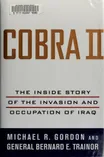
Cobra II
Bernard E. Trainor · 2006
Covering the 2003 invasion and initial occupation of Iraq, this work traces the decisions made by Defense Secretary Donald Rumsfeld, President George W. Bush, and the Pentagon's top commanders. The authors reconstruct major battles through interviews with those who fought them, while analyzing how American intelligence failures and miscalculations about post-invasion stability set the stage for years of conflict. Trainor's military background allows him to evaluate operational decisions with both critical distance and technical understanding.
This book deepens your understanding of how military operations unfold versus how they're explained to the public. Trainor demonstrates how institutional pressures, personality clashes, and strategic assumptions can reshape the course of a major war.
The Endgame
Bernard E. Trainor · 2012
This final volume completes the authors' account of America's Iraq War from 2003 through the 2011 withdrawal. The narrative covers the surge strategy under General David Petraeus, the internal politics that shaped policy decisions from Washington through Baghdad, and the complex aftermath involving Iranian influence and sectarian tensions. Trainor's analysis captures how military objectives shifted as Iraq's political landscape proved far more complex than planners had anticipated.
Read this to see how sustained conflict reshapes military doctrine and reveals the limits of military power alone to achieve political objectives. Trainor's perspective as both a former commander and longtime analyst gives weight to his observations about the war's ultimate trajectory.
Behind the Bamboo Curtain
Bernard E. Trainor · 2009
This work examines the experiences of Americans and South Vietnamese who lived through the fall of Saigon and its aftermath. Rather than focusing solely on combat operations, the book centers on how survivors adapted to life after 1975, navigating exile, displacement, and the challenges of rebuilding in foreign lands. Trainor and Jenner combine personal narratives with historical context to show how the Vietnam War's end created ripples that extended far beyond Southeast Asia.
Move from high-level military strategy to the human impact of war's conclusion. This book demonstrates Trainor's ability to examine military conflict through multiple perspectives, going beyond generals and strategies to the people affected by these historical moments.
Military Perspectives on Humanitarian Intervention and Military-Media Relations
Bernard E. Trainor · 1995
Based on the Chester W. Nimitz Memorial Lectures on National Security Affairs, this collection presents Trainor's thinking on when and how militaries should engage in humanitarian operations. The work examines the relationship between armed forces and media during military operations, addressing how information flows, how narratives develop, and how military professionals interact with journalists. Trainor brings his dual experience as a military officer and news correspondent to these theoretical and practical questions.
This book reveals the thinking behind Trainor's approach to military journalism and strategic analysis. Unlike his narrative histories, these lectures show his framework for evaluating military ethics, decision-making, and the role of media in shaping public understanding of conflict.
Purple Hearts - Battle Scars
Bernard E. Trainor · 2008
This book captures the experiences of Korean War combatants through personal narrative and firsthand accounts. The work weaves together stories of service, sacrifice, and survival from those who fought in what many considered the forgotten war. Trainor's contribution as foreword author provides historical context that frames these individual stories within the larger arc of American military history and the war's lasting impact.
Here Trainor shifts from his investigative narrative style to curate and contextualize the voices of those who lived through combat. This approach shows his commitment to preserving military history through the experiences of veterans themselves.