
Author guide
David Foster Wallace
Born in 1962 in Ithaca, New York, David Foster Wallace grew up in Illinois where he was a competitive junior tennis player before turning to writing. After earning degrees in philosophy and English from Amherst College, he pursued an MFA in creative writing at the University of Arizona and later taught fiction and literary studies at Emerson College, Illinois State University, and Pomona College.
Wallace became one of the most influential American writers of the late twentieth century through a combination of maximalist fiction and intellectually rigorous essays that transformed ordinary subjects into profound cultural critique. His work is characterized by humor, formal innovation, and an unflinching examination of American life, consciousness, and what he saw as the dangers of passivity in contemporary existence.
Struggling with depression throughout his life, Wallace died by suicide in 2008 at age 46, leaving behind a legacy that has only deepened with time. His unfinished final novel and posthumous essay collections established him as a essential figure in literature, one whose concerns with attention, authenticity, and the difficulty of human connection remain urgently relevant.
Where to start, in order
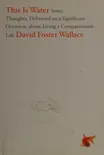
This Is Water
David Foster Wallace · 2009
Compiled from the 2005 commencement address Wallace delivered to Kenyon College's graduating class, this slim volume explores the fundamental act of choosing what to think about in everyday life. Wallace argues that true education teaches us not what to think but how to think, and he examines the often-painful work of directing our own attention toward compassion rather than automatic self-interest.
This is Wallace at his most direct and personally vulnerable. Unlike the dense architectural ambitions of his novels, here he strips away irony to argue for genuine, difficult human connection. It's the clearest articulation of what his writing was ultimately about and the most universally accessible entry point to his philosophy.
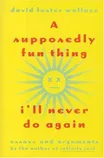
A Supposedly Fun Thing I'll Never Do Again
David Foster Wallace · 1997
This essay collection demonstrates Wallace's gift for finding intellectual and emotional depth in the overlooked corners of American life. Pieces explore a luxury cruise ship, television's role in modern consciousness, state fairs, tennis, and the experience of being a Midwesterner, each transformed through his combination of meticulous reporting and philosophical speculation into something far larger than its ostensible subject.
These essays showcase why Wallace mattered to contemporary literature. They prove that intelligence and genuine curiosity can make anything interesting, and they display the generosity of his attention. Readers who appreciate these essays often find themselves becoming Wallace enthusiasts because they see how his mind works, how it connects seemingly trivial details to larger truths about culture and psychology.
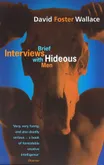
Brief Interviews with Hideous Men
David Foster Wallace · 1999
A formally experimental collection featuring fragmented stories presented as transcripts, nested narratives, and various fragmentary forms. The work circles around themes of desire, alienation, and the near-impossibility of genuine connection through recurring male characters being interviewed by an unseen female questioner, creating a portrait of contemporary male consciousness at once comic and deeply disturbing.
This collection represents Wallace's most daring formal achievement and directly influenced experimental fiction for two decades after its publication. The fragmented structure doesn't feel like a gimmick but rather the only honest way to represent modern consciousness and male anxiety. It shows a side of Wallace less seen than Infinite Jest but equally important to understanding his artistic ambitions.
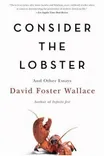
Consider the Lobster, and Other Essays
David Foster Wallace · 2005
A collection of ten major essays that span Wallace's intellectual interests from the ethics of boiling lobsters alive at the Maine Lobster Festival to extended profiles of Roger Federer and other athletes, plus pieces on reality television and post-9/11 American consciousness. The title essay uses the visceral question of animal suffering as a springboard for examining how we extend moral consideration to other creatures.
This represents Wallace in full command of his powers as an essayist. The Federer piece alone is frequently cited as among the greatest sports writing ever published, but across all ten essays, he demonstrates that the form of the essay could accommodate philosophical rigor, emotional honesty, and literary sophistication simultaneously. This is Wallace the public intellectual at his peak.
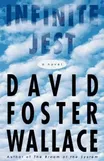
Infinite Jest
David Foster Wallace · 1996
A sprawling 1,000-plus page novel set in a near-future North America where years are sponsored by corporations and time flows strangely. Multiple narrative threads weave together residents of a prestigious tennis academy, patients recovering from various addictions in a halfway house, and a mysteriously lethal form of entertainment so engaging that people watch it until they die. The text includes hundreds of endnotes that complicate, expand, and sometimes contradict the main narrative.
Infinite Jest is Wallace's masterpiece and arguably the most ambitious American novel of the late twentieth century. It refuses easy answers, resists summary, and demands genuine intellectual effort from readers, yet remains genuinely funny and often moving. It defined what ambitious contemporary fiction could accomplish and remains his most influential work, the one that established him as the defining writer of his generation.
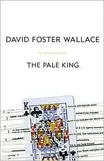
The Pale King
David Foster Wallace · 2011
Published posthumously and unfinished, this novel fragments multiple narrative threads around the mundane world of the Internal Revenue Service, exploring boredom, focus, and the search for meaning within a bureaucratic system designed to produce meaninglessness. Editor Michael Pietsch assembled the work from hundreds of pages of manuscript fragments and notes Wallace left behind, preserving the experimental, self-conscious form that characterized the incomplete manuscript.
Though unfinished, The Pale King earned a Pulitzer Prize nomination and revealed Wallace's final artistic direction. It attempts something riskier than Infinite Jest: finding genuine human depth within the structure of unbearable tedium. It's a fitting final statement from a writer obsessed with attention and consciousness, and its very incompleteness becomes part of its meaning.