
Author guide
Donald E. Westlake
Donald Edwin Westlake (1933-2008) was an American writer who built a career around two unforgettable criminals. Parker, his cold and methodical thief written under the pseudonym Richard Stark, represented the ruthless, uncompromising side of heist fiction. John Dortmunder, his other major creation, showed Westlake's gift for comedy: the same criminal world, but populated by people constantly failing upward. Between these two series and his standalone novels, Westlake proved that crime fiction could be as varied as the lives of the people inside it.
He started as a prolific pulp writer in the 1950s, often publishing several books a year under different names. His breakthrough came when he committed himself to the Stark pseudonym in the early 1960s, building Parker into a force that influenced every heist writer after him. When he shifted back to his own name, Westlake showed an even wider range: comic novels, dark satires, romance, science fiction. His work earned him three Edgar Awards and the Mystery Writers of America's Grand Master honor in 1993.
What made Westlake distinctive was his refusal to repeat himself. Parker's world stayed cold and procedural. Dortmunder's stayed funny, with scores going sideways in new and ridiculous ways. His standalones ranged from brutal social commentary to pure entertainment. That variety, combined with clean prose and an instinct for character, is why readers keep discovering him decades later.
Where to start, in order
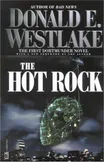
The Hot Rock
Donald E. Westlake · 1970
John Dortmunder is a professional thief hired to steal a large diamond. He and his crew manage to pull off the heist. Then they lose the diamond. Then they steal it again. And lose it again. What follows is a comedy of errors where each attempt to recover the stone spirals into a new disaster, and Dortmunder's careful planning meets reality's indifference to planning.
Start here. This novel introduces Westlake's comic gift and proves that crime stories don't need bodies to be entertaining. The novel's tight plotting and genuine laughs show why readers chose this over Parker when they wanted a break from grimness.
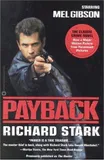
The Hunter
Donald E. Westlake · 1962
Parker, a professional thief, is betrayed by a woman and left for dead. He survives and spends the novel hunting down the people responsible, working his way methodically through the criminal underworld. There's no humor here, only a man who operates by a code and never stops moving forward until his business is settled. Every act is purposeful. Every scene tightens the noose.
This is the foundation of modern heist fiction. Westlake wrote as Richard Stark to signal a different kind of story: darker, faster, completely unsentimental. Parker himself became the template for every tough protagonist who followed. Reading this first novel explains why the character lasted through 24 books.
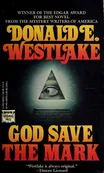
God Save the Mark
Donald E. Westlake · 1967
Fred Fitch inherits $20,000 and becomes an instant target for every con artist, scammer, and fraud in the city. He's so gullible that he makes the perfect victim, and a succession of characters try to separate him from his inheritance using schemes of increasing complexity. The novel follows Fitch's hapless attempts to hold onto money while surrounded by people who see him as easy prey.
This novel won the Edgar Award and shows Westlake's range beyond series work. It's a comedy that works on every level: as a satire of American greed, as character comedy, and as a surprisingly thoughtful look at how easy it is to exploit someone's trust. The plot mechanics are elegant, and Westlake's prose here is as sharp as it gets.

Comeback
Donald E. Westlake · 1997
Parker returns after 25 years away from crime. Someone is using his name, and his old crew is being called back in. What unfolds is a novel about how the world has changed (or hasn't), about loyalty and grudge and the simple fact that some people don't quit just because they've taken a break. The operation itself is a heist, but the real story is about reconnection and what it costs.
Westlake proved with this book that Parker could evolve. The character doesn't soften, but the world around him does, and that contrast creates a different kind of tension. For readers who loved The Hunter but wondered what happened next, Comeback shows that story doesn't end. It deepens.
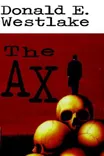
The Ax
Donald E. Westlake · 1997
Burke Devore is a middle-aged technical writer laid off from his job. He decides the only way to get work is to eliminate his competition. He methodically tracks down other technical writers in his area and kills them. As the body count rises, law enforcement closes in, but Burke keeps moving forward, convinced that his plan will work if he can just eliminate enough obstacles.
This is Westlake's darkest novel and perhaps his most relevant. It's a brutal satire of unemployment, corporate logic, and the way society measures human worth. The protagonist is sympathetic in some ways and monstrous in others, which makes the book deeply unsettling. It shows that Westlake could be serious without being predictable.
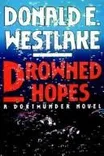
Drowned Hopes
Donald E. Westlake · 1990
Dortmunder and his girlfriend Annie reunite to help an old friend find money he buried near a reservoir before it flooded. The problem: the reservoir is now occupied by a dam and a lake, and getting to the money requires coordination, planning, and luck. What proceeds is a Dortmunder operation at its most elaborate, where every solution creates three new problems.
This is Westlake's most ambitious Dortmunder novel, combining the series' comic sensibility with a heist that's genuinely complicated. The characters are at their most developed, the supporting cast is rich, and the plotting shows that Westlake could make something funny and intricate at the same time. It's the book that proves Dortmunder could support a novel as long and detailed as any Parker.