
Author guide
Ellis Peters
Edith Mary Pargeter (1913-1995) began her writing career while working as a pharmacist's assistant, publishing her first stories in 1936. During World War II she served in the Women's Royal Naval Service, experiences that informed her early work. Working under multiple names and across varied genres, she built a reputation as a versatile author of crime novels, historical fiction, and contemporary mysteries.
Under the pen name Ellis Peters, she created the Inspector George Felse detective series starting in 1951, which ran for thirteen novels and featured her signature blend of police procedure with family dynamics. Her award-winning crime novels demonstrated psychological insight and technical mastery, but she became most famous for her medieval mysteries.
In 1977, at age 64, Peters introduced Brother Cadfael, a crime-solving Benedictine monk set in 12th-century Shropshire. The Cadfael Chronicles eventually spanned twenty novels and one story collection, revolutionizing the historical mystery genre and introducing readers to a protagonist unlike any detective in English fiction. She received the Cartier Diamond Dagger in 1993 for lifetime achievement in crime writing and was honored as Officer of the Order of the British Empire.
Where to start, in order
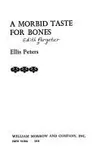
A Morbid Taste for Bones
Ellis Peters · 1977
Brother Cadfael investigates the theft of a saint's bones intended for a Welsh monastery. The case takes him from his abbey in Shrewsbury to Wales, where ancient political tensions and modern greed collide. A young Welsh girl becomes central to unraveling a murder hidden beneath layers of religious devotion and territorial ambition.
This is where Cadfael first appeared, introducing readers to a former crusader and sea captain who took monastic vows in his forties. Peters created a detective character who solved mysteries not through violence or authority but through his knowledge of herbs, human nature, and forgotten histories.
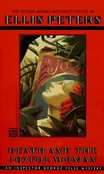
Death and the Joyful Woman
Ellis Peters · 1961
Inspector George Felse and his son Dominic become entangled in investigating the death of a wealthy woman whose life was built on secrets and manipulation. The case tests family bonds and loyalty against the demands of justice, as Felse uncovers betrayals that reach into the heart of their own community.
This Edgar Award winner demonstrates Peters's mastery of contemporary crime fiction before Cadfael made her internationally famous. It shows her ability to weave complex character relationships and moral ambiguity into detective work, skills that would later elevate her medieval mysteries.

One Corpse Too Many
Ellis Peters · 1979
Brother Cadfael discovers a murdered man among the genuine victims of a 12th-century siege, buried anonymously among the legitimate dead. The corpse becomes a puzzle that pulls him deeper into the politics of the English Civil War and the fates of those caught between two kings.
The second Cadfael novel solidifies what made the first work into something larger. Peters deepens our understanding of Cadfael's character and his unusual position as a bridge between the secular and religious worlds, able to move through both with credibility.

Monk's Hood
Ellis Peters · 1980
A herbalist dies from monkshood poison intended for someone else, setting Cadfael on the trail of a carefully planned murder hidden among multiple motives. His own herbal knowledge becomes both a liability and an asset as he navigates suspicion and works to protect the innocent.
This Silver Dagger Award winner showcases Peters at her best, using medieval medicine and herbs as central to both plot and characterization. The novel demonstrates how Cadfael's specific skills and perspective allow him to solve mysteries no ordinary detective could access.

Saint Peter's Fair
Ellis Peters · 1981
During the great annual fair at Shrewsbury, a merchant's son is murdered and his sister vanishes. Cadfael must navigate the chaos of the fair and the conflicting loyalties of the merchants to find the truth beneath claims of robbery and revenge.
Peters uses the fair as both setting and character, creating a vivid portrait of 12th-century commerce and the collisions between different social worlds. The novel's central moral puzzle about justice versus mercy shows her deepening confidence in exploring complex questions through Cadfael's eyes.

The Sanctuary Sparrow
Ellis Peters · 1983
A runaway boy accused of murder flees into the abbey church seeking sanctuary. Cadfael believes in the boy's innocence and races to prove it before the murderer remains undiscovered and justice falls on the powerless instead of the guilty.
This novel strips away secondary characters to focus on the simple demand: find the truth. Peters demonstrates her ability to make readers care deeply about ordinary people caught in extraordinary circumstances, and to use Cadfael as a voice for mercy tempered by justice.