
Author guide
James Ellroy
Lee Earle Ellroy built a reputation as the most fearless chronicler of Los Angeles crime, working on legal pads and developing a style so compressed it reads like poetry written by a cop. He rose to prominence in the 1980s after spending years caddying and writing in obscurity, determined to capture the city's corruption not with sentimentality but with velocity and precision.
His breakthrough came with the L.A. Quartet, a series that redefined how modern crime fiction could operate: dense, propulsive, filled with interconnected stories that spiral across decades. The narrative voice itself became a character, mixing street slang with bureaucratic jargon, creating a distinctive sound no one else has matched.
Ellroy's work explores the gap between official histories and actual events, the way power corrupts investigation, and the cost of getting close to the truth. His longer novels demand attention; they reward readers who stay with the momentum.
Where to start, in order
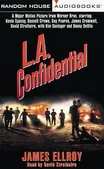
L.A. Confidential
James Ellroy · 1990
Three cops in 1950s Los Angeles, each corrupt in different ways, become tangled in a murder investigation that pulls them toward truth or deeper into the machinery of their own deception. Ellroy builds a Los Angeles where sex, violence, politics, and narcotics money form the actual government, with the LAPD as its instrument.
Start here. This is Ellroy's most accessible work and the one that made his reputation. It's the novel that convinced readers crime fiction could be this sharp and propulsive.
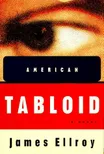
American Tabloid
James Ellroy · 1995
Three men working in the criminal underworld, the LAPD, and federal law enforcement intersect across the 1950s and into the Kennedy era. Ellroy braids together organized crime, the CIA, the mafia, FBI ambitions, and presidential corruption into a narrative that feels less like fiction than a secret history of post-war America.
TIME named this their fiction book of the year for good reason. It's the gateway to Ellroy's more elaborate plotting and shows what he can do with a canvas wider than LA.
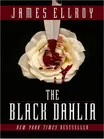
The Black Dahlia
James Ellroy · 1987
Two LAPD detectives become obsessed with an unsolved 1947 murder of a young woman, their investigation pulling them into Hollywood's darker layers and forcing them to question what kind of cops they want to be. The novel uses a real historical crime as a frame for exploring how violence shapes the people who pursue justice.
This is the book that started the L.A. Quartet, and reading it after L.A. Confidential lets you see how Ellroy layers his world. You'll recognize the texture and recognize that the four books form a larger architecture.
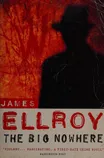
The Big Nowhere
James Ellroy · 1988
Set in late 1950s Los Angeles, the novel braids together the stories of a homicide cop, a deputy sheriff, and an undercover specialist, each pursuing different angles on an interconnected set of murders tied to the film industry and gay life underground. The narrative deepens Ellroy's portrait of how the city works and who controls what.
The third book in publication order, it escalates the complexity of the L.A. Quartet. By this point you'll see how Ellroy manages multiple protagonists and competing investigations without losing momentum.
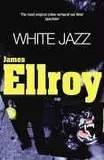
White Jazz
James Ellroy · 1991
A corrupt detective navigates Los Angeles police politics and criminal underworld pressure in the early 1960s, trying to stay ahead of multiple investigations closing in on him. The novel uses fragmented scenes and shifting perspectives to capture the paranoia and compartmentalization of a career on the edge of collapse.
This closes the L.A. Quartet, and Ellroy brings his stylistic experiments to their most aggressive form. It's the culmination of everything built across the previous books, written in a way that forces your complete attention.
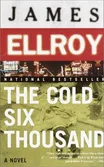
The Cold Six Thousand
James Ellroy · 2001
Moving between 1963 Dallas and the Vegas mob world, the novel follows operatives and criminals as they exploit the chaos of the Kennedy assassination and navigate shifting alliances in organized crime. Ellroy presents power as a game played by interconnected figures whose private feuds impact national events.
The first book of the Underworld USA Trilogy, it shows Ellroy operating at maximum ambition. The LA Quartet prepared you for this; now he's working with a much wider timeline and more complex political machinery. Pick it up when you're ready to commit to longer, denser narrative work.