
Author guide
James Redfield
James Redfield (born 1950) spent 15 years as a therapist specializing in trauma work with adolescents before walking away from his practice in 1989 to write full-time. That gamble paid off spectacularly. His 1993 debut novel, self-published initially, became one of the most financially successful self-published books ever and eventually sold over 20 million copies worldwide. The book arrived at a cultural moment when readers were hungry for spiritual frameworks outside traditional religion.
Redfield has never claimed to write conventional fiction. He's described his work as parables: stories designed to illustrate philosophical points rather than to develop character arcs or resolve complex plots. This honest framing matters, because readers who approach his novels expecting literary craftsmanship will be disappointed. Those seeking accessible explorations of synchronicity, consciousness, and humanity's spiritual potential will find what they're looking for. The criticism stings because it's earned, but Redfield's influence on 90s spirituality remains undeniable.
His novels follow a progression: starting with personal spiritual awakening in Peru, moving to collective consciousness and soul groups in Appalachia, then expanding the lens to Tibet and Eastern mysticism. Later works, written in collaboration with other thinkers, apply these ideas to science and evolution. The throughline is consistent and unashamed: Redfield believes spiritual insight is the key to solving human problems.
Where to start, in order
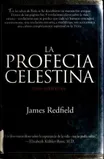
The Celestine Prophecy
James Redfield · 1993
An American on a spiritual quest travels to Peru to discover an ancient manuscript containing nine spiritual insights. Along the way, he encounters synchronicities that guide him deeper into understanding humanity's connection to a larger purpose. The manuscript itself is never fully explained to the reader, but rather experienced through the narrator's unfolding realizations.
This is where Redfield's voice emerged fully formed. If you're curious about what the bestseller mania was actually about, start here. The book works best if you approach it as a spiritual adventure rather than a mystery plot.
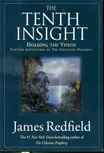
The Tenth Insight: Holding the Vision
James Redfield · 1996
The sequel moves the action to the Appalachian Mountains as one character disappears while exploring a forest. The narrative introduces the concept of soul groups, reincarnation, and the possibility that humans can collectively visualize a positive future to counteract negative prophecies. Readers meet new spiritual teachers and encounter what the book presents as other dimensions of consciousness.
This deepens the philosophy beyond personal awakening into collective responsibility. Redfield doubles down on his parable approach here, so if the first book resonated with you, this continues the thread convincingly.
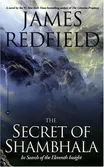
The Secret of Shambhala
James Redfield · 1999
The third novel transplants Redfield's spiritual themes to Tibet and Buddhist contexts. The protagonist searches for the legendary kingdom of Shambhala, encountering Tibetan teachings and exploring how Eastern and Western spiritual traditions might converge. The narrative suggests that spiritual warriors are needed to defend and advance human consciousness.
By this point, you'll know whether Redfield's method works for you. This book expands the geographical and cultural scope beyond the previous American settings, introducing Eastern philosophy into his Western spiritual narrative.
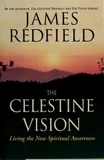
The Celestine Vision
James Redfield · 1997
Abandoning fiction entirely, Redfield offers a nonfiction exploration of the philosophical underpinnings behind his novels. This book attempts to ground his spiritual ideas in historical precedent, offering commentary on spirituality, consciousness, and human evolution. It functions as both companion guide and philosophical essay.
Read this if you want to understand what Redfield actually believes versus what his characters discover. It's more grounded and argumentative than his novels, though still not academic in tone.
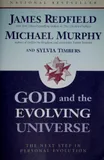
God and the Evolving Universe
James Redfield · 2002
Collaborating with Michael Murphy (founder of the Esalen Institute) and Sylvia Timbers, Redfield explores how spiritual experience relates to evolution and the universe's fundamental nature. The book attempts to synthesize spirituality with scientific thinking, examining consciousness as an evolutionary force rather than an emergent property.
This shows Redfield in dialogue with serious thinkers about science and consciousness. If you're interested in how spirituality might engage with rather than oppose scientific worldviews, this offers one attempt at that conversation.
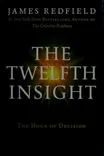
The Twelfth Insight
James Redfield · 2011
Published 15 years after The Secret of Shambhala, this return to fiction represents Redfield's reflection on what came before. Characters reconvene to explore a final insight about humanity's relationship to the physical world and higher dimensions. The tone is more introspective than his earlier novels, questioning and refining rather than revealing.
This later work shows an author reconsidering his own mythology. If you've read the entire arc, this provides a mature recalibration without abandoning the core ideas. It's the closest Redfield comes to questioning his own framework.