
Author guide
Malcolm Gladwell
Malcolm Gladwell is a Canadian journalist and bestselling author who has spent the last three decades chasing ideas about how the world actually works rather than how it should work. Born in England and raised in Ontario, he worked at the Washington Post before becoming a staff writer at The New Yorker in 1996, a position that gave him the platform and freedom to develop a distinctive voice. He became famous for identifying patterns others missed and spinning them into books that reached millions of readers.
He created something new at Little, Brown: the pop-nonfiction blockbuster that could explain social epidemics, human intuition, or the stories of outliers using narrative momentum instead of academic apparatus. The Tipping Point was the breakthrough that changed publishing itself. His early books offered readers the intellectual pleasure of sudden understanding, a feeling that complex human behavior could be unlocked by a clever framework or a well-placed anecdote.
Critics have long questioned whether his frameworks hold up under scrutiny. Scholars point out that he treats correlations as causation, cherry-picks cases to fit his thesis, and assigns scientific names to patterns that may be far more unpredictable than his language suggests. His work inspired both devotion and backlash, but either way, he changed what nonfiction could look like on the bestseller list. Over time his books have become more reflective, wrestling with the limits of his own methods and the unintended consequences of contagious ideas.
Where to start, in order
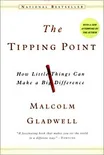
The Tipping Point
Malcolm Gladwell · 2000
Gladwell argues that social epidemics follow predictable patterns: that trends and behaviors spread through society not gradually, but in sudden moments when momentum tips. He traces how graffiti reduction changed New York City, how word-of-mouth marketing works, and how three kinds of people (connectors, mavens, salesmen) drive contagion. The book rests on the 'broken windows theory' of policing and introduces concepts like the 'Law of the Few' and the 'Stickiness Factor.'
This is where it started. The Tipping Point launched Gladwell's method onto the bestseller lists and shaped how millions of people think about social change and influence. It's the essential entry point to his thinking, even though later critics challenged many of its claims.
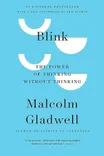
Blink
Malcolm Gladwell · 2004
Blink explores the power and peril of rapid cognition, those snap judgments the mind makes in two seconds or less. Gladwell examines how a museum curator instantly recognized a fake Greek statue, how speed dating works, and why first impressions are sometimes more accurate than deliberate analysis. He also shows when snap judgments fail spectacularly, especially when unconscious bias corrupts the process.
It complements The Tipping Point by zooming into the moment of individual decision-making. For readers who loved the first book, Blink seemed to deepen the argument about how behavior actually works. It also begins to hint at the messiness of human judgment that his later books would explore more directly.
Outliers
Malcolm Gladwell · 2008
Outliers investigates why some people become exceptional. Gladwell argues that success is not simply the result of individual talent, but shaped by timing, culture, and circumstance. He traces Bill Gates' access to a computer lab at age thirteen, The Beatles' ten thousand hours performing in Hamburg, and the relationship between how rice farmers think and mathematical ability. The book's most famous claim is the '10,000-hour rule' for mastery.
This book brought Gladwell's method to peak popularity, even as it attracted serious criticism from researchers who questioned whether his examples were representative or cherry-picked. For many readers, it felt revelatory; for scholars, it felt reductive. It's worth reading to see both why his approach appeals and where it breaks down.
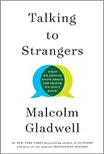
Talking to Strangers
Malcolm Gladwell · 2019
Gladwell steps back from celebrating snap judgments to examine how badly humans misjudge strangers. He traces the Amanda Knox case, the Bernie Madoff scheme, and a botched interrogation by the CIA, asking: Why do we assume people are honest when they're lying? Why do we disbelieve them when they're telling the truth? The book explores how context matters, how power distorts perception, and how the interview itself is an imperfect tool.
This is Gladwell taking a more critical look at his own earlier claims about human judgment. It shows him wrestling with the consequences of Blink's optimism about rapid cognition. For readers familiar with his earlier work, it reads as a course correction and demonstrates that his thinking has matured.
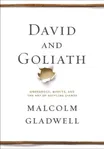
David and Goliath
Malcolm Gladwell · 2013
Rather than accepting the biblical story at face value, Gladwell shows how David was not an underdog but strategically equipped to win, while Goliath's size was actually a vulnerability. He extends this reframing to modern underdogs: dyslexia as a hidden advantage in business, small college students who succeed at elite universities, and civil rights activists who won through principled rebellion. The book argues that our definitions of advantage and disadvantage often get it backward.
It shows Gladwell applying his pattern-finding method to deeper questions about power, disability, and resilience. Where Outliers felt like a list of success stories, David and Goliath attempts something more thematically ambitious. It's his most philosophically engaged book and demonstrates how his frameworks can probe genuinely complex ideas.
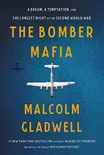
The Bomber Mafia
Malcolm Gladwell · 2021
Gladwell reconstructs the World War II conflict between precision bombing advocates and those, like General Curtis LeMay, who chose brutal firebombing. He traces the ideas of a Dutch engineer, the calculations of Harvard chemists, and the deadliest night in human warfare (Tokyo, 1945). The book grapples with whether LeMay's scorched-earth tactics, though horrific, may have prevented an even costlier invasion of Japan.
This book shows Gladwell moving toward narrative and moral ambiguity rather than clean frameworks. It's less about extracting rules and more about holding competing goods and evils in tension. It suggests that his best work may be when he abandons the urge to simplify and instead lets complexity breathe.
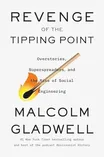
Revenge of the Tipping Point
Malcolm Gladwell · 2024
Twenty-five years after The Tipping Point, Gladwell returns to social epidemics but with a different lens: the dark side of contagion. He explores bank robbers in Los Angeles, a forgotten 1970s television show, and the twin catastrophes of the opioid crisis and COVID-19. The title suggests that the same dynamics that spread good ideas also spread harm, and that understanding contagion means reckoning with its failures.
This is Gladwell reflecting on his own legacy. It's a more somber book than his early work, suggesting that his career-long project of finding hidden patterns has also revealed how quickly those patterns can turn destructive. For long-time readers, it feels like the conversation continuing with darker wisdom.