
Author guide
Nalo Hopkinson
Nalo Hopkinson has spent thirty years reshaping speculative fiction from the margins. Born in Jamaica and raised across the Caribbean and Canada, she writes from the inside of diaspora cultures that mainstream SF had largely ignored, grounding her futuristic and magical worlds in the rhythms of Creole speech, the weight of colonial history, and the actual practice of Caribbean spiritual traditions. Her debut Brown Girl in the Ring won the Locus Award for Best First Novel in 1999, and she hasn't stopped winning since: World Fantasy Awards, Sunburst Awards, Hugo nominations, Nebula nominations, the full apparatus of genre recognition.
What makes her work distinct isn't just that she centers Black Caribbean voices, though that alone matters. It's that her speculative imagination itself operates differently. Where other SF builds futures by extrapolating Western technology and Western trauma, Hopkinson's stories emerge from oral tradition, from folk memory, from the principle that magic and science aren't opposites. Her characters don't ask permission to matter. They survive, they transform, they steal from the rich and give to the poor, and they do it with the confidence of people who know their own stories.
In 2020, the Science Fiction and Fantasy Writers Association named her the 37th Damon Knight Grand Master, honoring a lifetime of work that expanded what speculative fiction could hold. Hopkinson taught at UC Riverside for over a decade, mentoring younger writers into the same refusal to make their work small or safe.
Where to start, in order
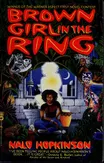
Brown Girl in the Ring
Nalo Hopkinson · 1998
Set in a decayed Toronto of the near future, the city's core has collapsed into a sprawl of dangerous slums called the Burn. Ti-Jeanne and her grandmother Mami practice obeah, Caribbean herbalism and spirit magic, to survive. When a corrupt Ontario premier needs a heart transplant and manipulates a drug lord into acquiring one from the slums, an old woman's magic awakens something that won't be contained.
This is where to start. Her debut novel won the Locus Award and established the voice that defined a generation of Caribbean SF: urgent, rooted in specific cultural practice, unafraid of both the spiritual and the brutal. Brown Girl announces that the margins will now tell their own stories.
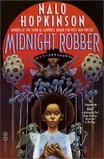
Midnight Robber
Nalo Hopkinson · 2000
An epic across two worlds. On Toussaint, an advanced orbital settlement, a young woman named Tan-Tan learns carnival traditions and hears stories of the Midnight Robber, a legendary figure who steals from the rich. When her father's violence becomes unbearable, she escapes to New Half-Way Tree, a primitive exile world, where she becomes the myth herself: the Robber Queen, surviving by her wits and the old stories.
Here Hopkinson builds the full architecture of her vision: futures built on ancestral memory, technology alongside folklore, a young woman's transformation into legend through resistance. The Caribbean voice isn't decoration; it's the engine of the story. Hugo-nominated for good reason.
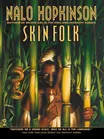
Skin Folk
Nalo Hopkinson · 2001
Fifteen stories that are themselves fables, each one a Caribbean reimagining of something familiar. Riding the Red tells Little Red Riding Hood from her grandmother's perspective. The Money Tree weaves piracy, greed, and a mother who is a river spirit. The Glass Bottle Trick marries Beauty and the Beast with Persephone. Precious adapts the Midas myth. These aren't retellings; they're transformations.
This collection won the World Fantasy Award because Hopkinson proves in story after story that the most powerful magic is in how you tell it. These tales read like something overheard, like something you know but have never heard named. They show her full range in compressed form.
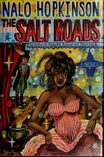
The Salt Roads
Nalo Hopkinson · 2003
The African water goddess Lasirén moves through time, possessing and guiding three women toward their own liberation. Mer is an enslaved healer in 18th-century Haiti fighting to keep her people's spiritual connection alive. Jeanne Duval is a Black woman in 1840s Paris navigating economics and desire and the gaze of men like Charles Baudelaire. Thais is a prostitute in 4th-century Alexandria choosing spiritual freedom. The salt roads connect them, pathways traced in sweat and tears.
This is Hopkinson's most ambitious work: historical, spiritual, sensual, and politically urgent all at once. The Salt Roads doesn't explain or apologize for its magic; it simply moves through centuries of women's bodies and freedom, showing how the fight never ends and never looks the same twice.
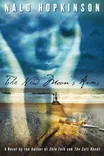
The New Moon's Arms
Nalo Hopkinson · 2007
Calamity Lambkin is fifty-something, experiencing menopause in a fictional Caribbean island nation, when she discovers she has the power to locate lost things. A mysterious nearly-drowned child appears on her beach; she names him Agway and suspects he may be the merperson of island folklore. As her hot flashes intensify, objects from her past resurface: childhood treasures, a bloodstained machete, the weight of slavery's shadow, neighbors' concerns about a woman harboring a strange boy.
More intimate than her epics, this novel proves her genius lives just as fully in domestic scale. The magic here is rooted in an aging woman's body, in the gossip of a small community, in the refusal to abandon what doesn't fit. It shows her at full maturity as a writer.
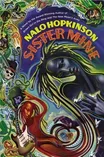
Sister Mine
Nalo Hopkinson · 2013
Makeda and Abby were conjoined twins, separated at birth. Makeda carries the loss of her sister in her body and spirit, searching for both independence and the spiritual power she lost in the separation. Her apartment search becomes a journey through supernatural encounters: a haint, a spirit that torments her; her mother who is a lake monster; her father with a kudzu vine possessing his soul. The modern world is full of magic, and it doesn't always want her to succeed.
This is Hopkinson for now: urban, contemporary, grounded in the real friction of finding an apartment and keeping work while battling the magical and the familial. She proves that Caribbean magical realism isn't historical; it's the current condition of being alive and diaspora at once.