
Author guide
Nicholas Sparks
Nicholas Sparks spent the first phase of his career doing everything except writing novels. After college, he worked in pharmaceutical sales and held various other jobs while his wife Cathy raised their children in New Bern, North Carolina. In his late twenties, Sparks became determined to publish a novel and spent months writing The Notebook in the evenings. The gamble paid off: the book became a New York Times bestseller in 1996 and launched him into a career that would reshape how contemporary romance reached film audiences.
Over three decades, Sparks has published 23 novels, all of them bestsellers, with more than 130 million copies sold across 50 languages. His formula is deceptively simple: small North Carolina towns, protagonists facing impossible circumstances, and the belief that love can transcend tragedy. What distinguishes him from other romance writers is his focus on emotional aftermath rather than just romantic triumph. His characters often pay real costs for their choices, and their victories feel earned rather than guaranteed.
Eleven of his novels have been adapted into major motion pictures, collectively earning over three-quarters of a billion dollars worldwide. This film success was not accidental. Sparks has actively shaped how his work translates to screen, maintaining creative control and collaborating with studios to preserve the emotional core of his stories. Through this dual career as novelist and film producer, he has fundamentally changed the economics of romance publishing and proved that adult emotional fiction could be both commercially viable and artistically credible at scale.
Where to start, in order

The Notebook
Nicholas Sparks · 1996
A young man of humble means falls in love with a woman from wealth and privilege in a small North Carolina town. When her parents separate them, he pours his heart into a notebook of their story, which he reads to his wife decades later as they navigate the final chapters of their lives. The novel braids together two timelines: their passionate romance in 1940 and their reunion in old age, testing whether love endures when everything else changes.
This is where the Sparks machine began. The Notebook established every element that would define his career: rural setting, emotional depth that acknowledges loss alongside devotion, and a story structure that rewards patient readers. It remains his most culturally significant work and the entry point that led to his subsequent success in film.
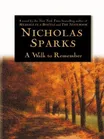
A Walk to Remember
Nicholas Sparks · 1999
Landon Carter, a wealthy but directionless teenager, is forced to spend time with Jamie Sullivan, the poor daughter of the local minister, as punishment for a prank. Their growing friendship deepens into something neither expected, but Jamie is hiding a secret that will reshape both their lives. The novel explores how one person can strip away pretense and teach you what actually matters.
This is Sparks' most emotionally devastating work, and it proves he could move readers through character transformation rather than just romantic spectacle. A Walk to Remember forced the genre to take teenage love seriously and showed that his best writing emerges when external obstacles (class, faith, mortality) force characters to examine their assumptions about life.
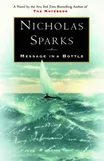
Message in a Bottle
Nicholas Sparks · 1998
A woman discovers a sealed bottle containing a love letter from a stranger washed ashore on a North Carolina beach. Moved by the raw emotion of the letter, she tracks down its author and discovers a widowed boat restorer grieving the loss of his wife. Their connection awakens both of them to the possibility of love again, but he is still anchored to the past.
Message in a Bottle demonstrates Sparks' skill at creating believable second-chance romance. The novel stands apart in his catalog because it centers on mature characters rebuilding after loss rather than young lovers overcoming obstacles. It also proved he could write compelling male characters with genuine interiority.
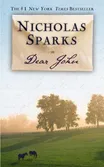
Dear John
Nicholas Sparks · 2006
John Tyree, a soldier deployed to Afghanistan after September 11th, receives a letter from Savannah Curtis, a young woman he spent one perfect summer with before his deployment. As they exchange letters across years of war, John must navigate between his commitment to Savannah and his duty as a soldier. When he returns home, he discovers that heartbreak doesn't follow military timelines.
Dear John represented a shift in Sparks' work toward explicitly addressing post-9/11 America and the specific loneliness of military life. The novel uses correspondence as its emotional engine, proving Sparks could build tension and intimacy entirely through written words. It also marks his willingness to interrogate whether love always survives when duty demands sacrifice.
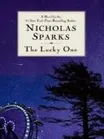
The Lucky One
Nicholas Sparks · 2008
Logan Thibault returns from Iraq convinced he survived the war because of a photograph of a stranger he found in the wreckage. Obsessed with finding the woman in the photo, he tracks her down to a small North Carolina town where she lives a quiet, walled-off life. Their attraction is immediate, but Logan's belief in destiny clashes with her skepticism about fate.
The Lucky One explores the tension between chance and meaningful connection. It asks whether the story you tell yourself about why something happened is as important as what actually happened. The novel deepens Sparks' recurring theme that love requires both people to believe the relationship is worth the risk.

The Last Song
Nicholas Sparks · 2009
Ronnie Miller, a classically trained pianist, stops playing music after her parents divorce and arrives at an oceanside town determined to spend a miserable summer. She meets Will Blakelee, a college student from a prominent local family, and discovers that he shares her habit of self-protective isolation. Their relationship becomes intertwined with her father's redemption and her own return to music.
The Last Song is Sparks' most explicitly about reclaiming purpose and identity through relationship. The novel adds emotional layers through Ronnie's musical gift, using performance as a metaphor for vulnerability. It also shows his range in writing younger protagonists who feel authentically flawed rather than romanticized.

Safe Haven
Nicholas Sparks · 2010
Katie Feldman arrives in a small North Carolina coastal town with nothing but a duffle bag and a new identity, fleeing from someone dangerous in her past. She takes work in a bookstore and meets Alex Wheatley, a widowed single father running a lodge, who senses she is carrying a burden she won't discuss. As their connection deepens, Katie must decide whether love is worth the risk of being found.
Safe Haven proves Sparks could write psychological tension without abandoning emotional truth. The novel treats domestic violence as real and traumatic rather than a plot device, giving his romance genuine stakes. It also shows his capacity to write mystery and suspense while maintaining the emotional specificity that defines his work.