
Author guide
Octavia E. Butler
Octavia Butler was born in Pasadena in 1947 and became the first science fiction author to earn a MacArthur Fellowship in 1995, recognized for expanding the genre's possibilities through rigorously unsentimental examinations of power and survival. Despite dyslexia and early shyness, she published steadily from 1971 onward, creating worlds where Black women and other marginalized figures navigate systems of oppression through compromise, intelligence, and radical change.
Her novels repeatedly asked uncomfortable questions about biology, consent, and whether humans can overcome their own hierarchical instincts. She died in 2006 at fifty-eight, leaving behind a body of work that proved science fiction could articulate contemporary struggles, racism, climate collapse, and authoritarian religion through speculative distance. Her influence on later Afrofuturist writers and artists remains foundational.
Where to start, in order
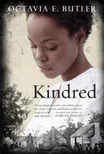
Kindred
Octavia E. Butler · 1979
Dana, a Black woman living in 1970s Los Angeles, is suddenly transported back in time to a Maryland plantation in the antebellum South. She discovers she is being pulled back repeatedly across decades to save the life of her ancestor, forcing her to witness and survive the brutality of slavery while struggling with her own survival and resistance.
Kindred solved a structural problem that made slavery immediate and intimate by transplanting a modern consciousness into historical trauma. It has become foundational to how American literature teaches this era.
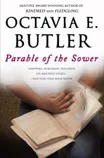
Parable of the Sower
Octavia E. Butler · 1993
Set in Los Angeles in the 2020s, the world is fracturing through environmental breakdown, economic inequality, and the collapse of public services. Lauren Olamina, a teenage prophet, sees her neighborhood burning and understands that survival means movement and building community. Butler grounds dystopia in the present day, showing how chaos arrives not through sudden political overthrow but through slow erosion.
Butler predicted the cascade of institutional collapse, climate crisis, and political breakdown that now reads as prophetic, earning it the top science fiction ranking in the New York Times' best books of 125 years poll in 2021.
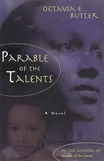
Parable of the Talents
Octavia E. Butler · 1998
The sequel picks up Lauren Olamina's story twenty years later as she struggles to protect her fledgling Earthseed community against a fundamentalist Christian president who rules through religious persecution. The novel interweaves journal entries and third-person narrative, building from the founding of Acorn to Lauren's death, depicting both personal loss and visionary persistence.
The novel won the Nebula Award and has only grown more prescient, exploring how authoritarian leaders weaponize religion and scapegoating in ways that feel urgently contemporary.
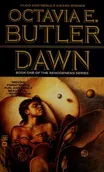
Dawn
Octavia E. Butler · 1987
Lilith Iyapo awakens 250 years in the future aboard an alien spacecraft after nuclear war has devastated Earth. The ship's inhabitants, the Oankali, saved humanity but demand a disturbing price: forced genetic hybridization between humans and aliens to create a new species. Lilith must navigate impossible choices about consent, survival, and what it means to be human when biology itself becomes contested territory.
It opens Butler's most formally ambitious trilogy and remains her most difficult novel ethically because Butler refuses to soften the scenario's moral complexity or offer reassurance about consent.

Bloodchild and Other Stories
Octavia E. Butler · 1995
This collection gathers seven stories spanning Butler's career, anchored by the title novella 'Bloodchild,' which explores a symbiotic alien species and a young human man forced into reproduction as a host for their eggs. The collection also includes 'Speech Sounds,' about a plague that strips humanity of language, and 'Amnesty,' which appeared in the expanded 2005 edition, showcasing Butler's range from intimate trauma to species-level catastrophe.
The title story won the Hugo, Nebula, and Locus Awards, and Butler was explicit that it explores pregnancy's physical danger and the impossibility of genuine consent under coercive circumstances.
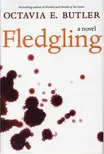
Fledgling
Octavia E. Butler · 2005
Shori Bishop awakens with amnesia in a cave, only to discover she's a genetically modified vampire created by human scientists to survive in daylight. Hunted by rival vampire families, she assembles a found family and must piece together her own origins while navigating a secret species parallel to humanity. Butler's vampire narrative is simultaneously a thriller and a meditation on belonging, consent, and chosen family.
Her final novel shifts from vast speculative systems to intimate domestic narrative, proving Butler could write genre thrillers focused on human connection rather than apocalypse.