
Author guide
Paul Hawken
Paul Hawken is an entrepreneur and environmentalist who has spent four decades exploring the relationship between commerce and nature. He founded two major businesses, Erewhon Trading Company and Smith & Hawken, before turning his attention to writing about how capitalism could work with rather than against the living world.
His early activism included working as a press coordinator during Martin Luther King Jr.'s Selma to Montgomery marches in 1965. Since then, he has built a body of work arguing that businesses have the power and responsibility to become restorative forces, healing ecological damage while generating value.
Hawken currently directs Project Drawdown, a research collaboration with hundreds of scientists and engineers focused on identifying and modeling solutions to reverse global warming. His books have been translated into 30 languages and reach audiences across business schools, environmental movements, and policy circles.
Where to start, in order
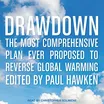
Drawdown
Paul Hawken · 2017
Drawdown catalogs the 100 most impactful climate solutions that already exist, ranked by their potential to reduce atmospheric carbon. The book goes beyond alarming scenarios to show concrete, measurable actions in energy, food systems, materials, and land use that are already being deployed successfully. Each solution includes cost-benefit analysis and implementation stories from practitioners worldwide.
Start here if you want to move past climate anxiety toward actionable optimism. This book gives you specific examples of what's working, making the problem feel less abstract and more solvable.
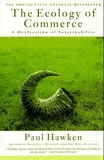
The Ecology of Commerce
Paul Hawken · 1993
Written in 1993, this book laid out a framework for reimagining capitalism itself. Hawken argues that business is the only institution large enough and fast enough to reverse ecological destruction, but only if companies redesign themselves as restorative rather than extractive enterprises. He examines how corporations have externalized the true costs of production and proposes a radical shift in accounting.
This is the foundational text that started Hawken's entire body of work. If you want to understand where his thinking comes from, this is required reading despite its age.
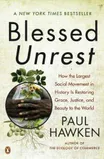
Blessed Unrest
Paul Hawken · 2007
Hawken examines a vast, decentralized global movement for social and environmental justice that he calls 'the largest movement in history.' Rather than focusing on headlines, he writes about the millions of organizations, churches, schools, and individuals quietly working for change. The book is part sociology, part spiritual reflection on what drives people to believe in restoration.
Read this when you need context for why individual and organizational efforts matter. It's an antidote to feeling alone in your concerns about the world.
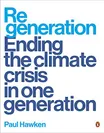
Regeneration
Paul Hawken · 2021
A New York Times bestseller that builds on decades of research to argue that humanity can end the climate crisis within one generation. Hawken synthesizes solutions from multiple sectors, examining how regenerative practices in agriculture, energy, transportation, and industry could create a thriving world simultaneously addressing poverty and resource scarcity. The book balances scientific rigor with accessible storytelling about real projects already underway.
This is Hawken's most recent and most optimistic work, incorporating everything he has learned. It's the place to turn when you want to understand his full vision for what's possible.
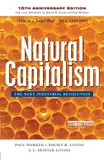
Natural Capitalism
Paul Hawken · 1999
Co-written with physicist Amory Lovins and economist L. Hunter Lovins, this book proposes a new industrial revolution based on four principles: radical resource productivity, biomimicry, service economy models, and investment in natural capital. The authors argue that environmental protection and economic prosperity are not opposing forces but natural allies when businesses redesign their operations from the ground up.
This is the most rigorous economic argument in Hawken's catalog. Read it if you want the deeper theory behind why sustainable business practices make financial sense.
Tomorrow's Economy
Paul Hawken · 2022
Hawken's most recent book examines how economic systems must shift from growth-at-all-costs toward circular models that account for natural and social capital. Drawing on emerging research in regenerative economics, he explores how communities are already creating local economies that build wealth while restoring ecosystems.
This shows Hawken's current thinking on economic transformation. If you've read his earlier work, this reveals how his perspective has deepened and evolved.
Green Growth Compass
Paul Hawken · 2021
A practical guide for businesses and organizations seeking to transition toward sustainable operations. The Green Growth Compass provides frameworks for measuring progress, setting science-based targets, and navigating the financial and operational changes required to become a regenerative enterprise. Case studies illustrate how different sectors are making the shift.
If you work in business or policy and need concrete tools rather than broad theory, this is your book. It translates Hawken's vision into actionable strategies.