
Author guide
Peter Guralnick
Peter Guralnick has been writing about American music since the 1970s, starting with his first book, Feel Like Going Home, which collected intimate portraits of blues and roots musicians. Over five decades, he has become what Bob Dylan calls the standard-bearer of music biography, uncovering stories that felt both urgent and true through careful research and genuine affection for his subjects.
His two-volume biography of Elvis Presley stands as the definitive account, covering everything from the singer's childhood in Mississippi to his final performances in Vegas. Dylan went so far as to say Last Train to Memphis cancels out all others. Beyond Elvis, Guralnick has written major biographies of Sam Cooke and Colonel Tom Parker, histories of soul and R&B music, and shorter investigations into figures like Robert Johnson that balance scholarship with mystery.
What sets Guralnick apart is his refusal to simplify. His books sit comfortably between fan enthusiasm and rigorous reporting. He listens to how singers talk about their art, he reads letters and documents, and he visits the places where history happened. He has taught at Vanderbilt since 2005 and won a Grammy for his liner notes on Sam Cooke Live at the Harlem Square Club, an honor that speaks to his ear for what makes a performance matter.
Where to start, in order
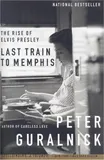
Last Train to Memphis
Peter Guralnick · 1994
This is the first volume of Guralnick's two-part Elvis biography, covering the singer's rise from poor Memphis boy to international star. It traces Elvis from his gospel-soaked childhood through his early Sun Records sessions to his 1958 induction into the Army, when he was still at the height of his cultural power. Guralnick moves between sessions, concerts, and backstage moments with a narrative control that feels like fiction but reads as total truth.
This book rewrote what it means to write about a famous person. It establishes Guralnick's method: deep reporting, attention to context, and a refusal to either mythologize or tear down. If you read only one book about Elvis, this is it. If you read only one book by Guralnick, this is the one that explains his entire approach.
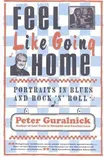
Feel Like Going Home
Peter Guralnick · 1971
Guralnick's debut collects profiles of blues masters and roots musicians from the late 1960s and early 1970s. The book includes vivid encounters with Muddy Waters, Skip James, and Howlin' Wolf, alongside chapters on Jerry Lee Lewis, Charlie Rich, and the Memphis and Chicago blues scenes. These are not interviews: they are stories built from observation, memory, and a genuine sense of what these artists had done for American music.
This is where Guralnick learned how to listen. Reading this book explains everything that follows. His voice is already present: patient, specific, never showing off. It remains one of the best books about American blues because it treats the music not as history but as something still alive.
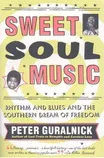
Sweet Soul Music
Peter Guralnick · 1986
A panoramic history of rhythm and blues and soul music from the 1950s through the 1970s, focusing on how gospel phrasing, country blues feeling, and modernist ambition merged in the work of Sam Cooke, Ray Charles, James Brown, Aretha Franklin, Otis Redding, and Al Green. Guralnick traces how Southern souls moved north and south, how record labels created and destroyed careers, and how a sound came to define an era.
This book does what only the best music history can do: it makes you understand not just what the music was but why it mattered and what it cost to make. Guralnick moves between individual tracks and social context, between studio detail and cultural moment. It is at once a work of scholarship and an act of love.
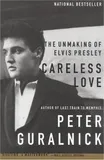
Careless Love
Peter Guralnick · 1998
The second volume of the Elvis biography picks up in 1958 after Elvis was drafted and follows him through his decline and death in 1977. Guralnick details the colonel's manipulation, the rise of RCA's star-making machinery, the decline in musical quality, and Elvis's own passivity in the face of mediocre material. The book is not a redemption story but a tragedy of talent squandered by forces outside his control and his own inability to resist them.
Many biographies know how to tell a rise. Few can tell a fall with this much dignity and precision. Careless Love completes the portrait begun in Last Train and stands as a necessary corrective to the myth of Elvis the icon. Together with its predecessor, it forms the most important book about American celebrity ever written.
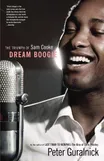
Dream Boogie
Peter Guralnick · 2005
Guralnick's biography of Sam Cooke traces the gospel prodigy's arc from choirboy to secular superstar to civil rights advocate to entrepreneur. The book covers Cooke's creative peak with Keen and RCA Records, his songwriting genius that influenced everyone from Bob Dylan to Aretha Franklin, and the tragic circumstances of his death at thirty-three. Guralnick shows how Cooke's business instincts made him a threat to the machinery of the music industry.
Dream Boogie proves Guralnick was not a one-subject writer. His Elvis books were definitive, but this biography shows he could bring the same rigor and humanity to another artist with equally rich material. It is Guralnick's second masterpiece and an essential book about American creativity and race.
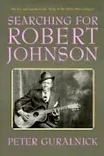
Searching for Robert Johnson
Peter Guralnick · 1989
A slim, haunting investigation into the life of Robert Johnson, the Mississippi blues singer whose recordings in the 1930s became the template for modern blues and rock and roll. Guralnick admits from the start that Johnson's life resists documentation. Instead of padding a thin biography, Guralnick builds a meditation on what it means to chase a ghost, to want to know someone who left almost no record of his interior life.
This book is the opposite of Guralnick's big biographies, but it demonstrates a different side of his craft: the ability to honor mystery rather than solve it, to write about absence as truthfully as presence. It shows that the best music writing is not always about what you can definitively prove.