
Author guide
Seymour Hersh
Seymour Hersh broke open the My Lai massacre in 1968, a story that won him the Pulitzer Prize and defined his career. For five decades, he tracked the secrets governments wanted kept: the bombing campaigns in Southeast Asia that politicians denied, Kissinger's hand in the coup in Chile, Israel's undeclared nuclear arsenal. His reporting was relentless, built on shoe-leather work, hundreds of interviews, and anonymous sources willing to risk their careers.
His books are rigorous histories of power, written with the conviction that the public has a right to know what was done in their name. But his later work, especially the reporting on Syria and the bin Laden raid, showed the danger of anonymous sourcing when verification fails. He admitted in 2025 that his Syria reporting was flawed. Yet even at his most contentious, he forced uncomfortable questions about authority and accountability.
What makes Hersh matter is his refusal to accept official accounts. He reports with anger, not because he's partisan but because the facts enrage him. His voice is direct, his prose plain, his arguments unadorned. You always know where he stands and how he got there.
Where to start, in order
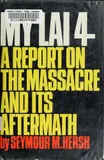
My Lai 4
Seymour Hersh · 1970
In 1968, U.S. soldiers killed over 500 civilians in the village of My Lai 4 in Vietnam. The Army covered it up. Hersh's dogged reporting, conducted while journalists and officials wanted the story buried, reconstructed what happened that morning through interviews with soldiers, officers, survivors, and villagers. He pieced together the command structure that enabled the massacre and then concealed it.
This is where Hersh's entire career began. It proved that a reporter working alone could force the government to answer for atrocities, and that accounts from ordinary soldiers and refugees could trump official denials. The Pulitzer Prize that followed gave him license to keep digging.
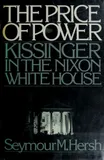
The Price of Power
Seymour Hersh · 1983
Henry Kissinger shaped American foreign policy during Nixon's first term. Hersh examines what that meant: the secret bombing of Cambodia that killed tens of thousands, the tilt toward Pakistan during the genocide in Bangladesh, the intervention in Chile that toppled a democratically elected government. Drawing from declassified documents and off-the-record interviews, Hersh shows how one man's realpolitik cost other nations dearly.
This book won the National Book Critics Circle Award because it combined original archival work with reporting that forced officials to defend decisions they'd long kept hidden. It's Hersh at his most accomplished, writing big political history with the precision of a crime investigation.
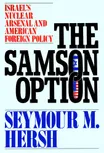
The Samson Option
Seymour Hersh · 1991
Israel built nuclear weapons in the 1960s without announcing the fact, a secret the U.S. government essentially endorsed through a quiet understanding. Hersh reconstructs how this happened and what it meant for Middle Eastern politics, drawing on defectors, former nuclear scientists, and intelligence officials. The result is a history of nuclear proliferation written from the ground up.
Hersh proved he could report on closed societies and weaponry as rigorously as he covered Vietnam. The book's combination of technical detail and human testimony set the standard for investigative books about nuclear policy.
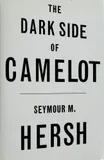
The Dark Side of Camelot
Seymour Hersh · 1997
John F. Kennedy's reputation rested on his handling of the Cuban Missile Crisis and his assassination. Hersh gathered accounts from Secret Service agents, mistresses, and former staffers to argue that Kennedy's health was worse than disclosed, his affairs more reckless, and his presidency more improvised than legend suggested. The book was controversial partly because Hersh's reporting process had flaws, including last-minute discovery of forged documents.
Despite its later criticism, this book represents Hersh's attempt to puncture the mythology around presidents and power. His willingness to overturn a sanctified narrative, even imperfectly, showed his independence from consensus opinion.
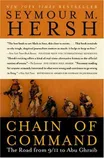
Chain of Command
Seymour Hersh · 2004
After 9/11, the U.S. military and CIA remade their interrogation practices, abandoning the Geneva Conventions and official policy to extract information by force. Hersh's reporting traced the paper trail and interviewed the military officers who pushed back from inside. He documented Abu Ghraib not as aberration but as policy, and showed how it reached from the Pentagon into the White House.
This collection of articles constitutes some of Hersh's most important post-9/11 journalism. It proved that torture wasn't a few bad soldiers but a system, and held powerful people accountable at a moment when the press largely accepted official narratives.
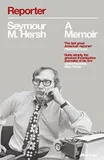
Reporter
Seymour Hersh · 2018
Hersh's memoir traces his path from journalism student to Pulitzer Prize winner, then through decades of stories that took him to Chile, Cambodia, Israel, Pakistan. He writes about sources who risked prison to tell him the truth, about editors who stood by him when officials pressured them, and about the discipline required to get a big story right. The book is both confession and instruction manual.
To understand Hersh's work, you need to understand his method. This memoir shows why he trusts anonymous sources, how he verifies facts across multiple witnesses, and what drives a reporter to make enemies of powerful people.