
Author guide
Sidney Sheldon
Sidney Sheldon arrived at fiction writing late, after establishing himself as a major force in television and film during the 1950s and 1960s. His Academy Award and Tony Award accomplishments gave him the craftsmanship and discipline that would later define his novels. When he turned to the page at age 40, he brought the narrative momentum of a screenwriter and the ability to sustain suspense across long stories.
His books became phenomenon bestsellers, consistently hitting the top of charts and remaining in print for decades. Over 300 million copies sold worldwide revealed an uncanny talent for pacing thrillers that grip readers from the first page and don't release them. Sheldon specialized in powerful female characters outmaneuvering hostile circumstances, revenge plots with moral gray areas, and the kind of plot mechanics that film studios loved.
What separated Sheldon from other commercial writers was his refusal to reduce characters to stereotypes. His protagonists faced genuine dilemmas without easy solutions. His antagonists were rarely one-dimensional villains. This complexity underneath the propulsive plots earned him serious readers alongside mass audiences.
Where to start, in order

The Other Side of Midnight
Sidney Sheldon · 1974
A young woman born into poverty in Marseille transforms herself into a glamorous seductress, systematically drawing powerful men under her spell as part of an elaborate revenge scheme against the American pilot who abandoned her. The story spans continents and decades, following her through affairs with wealthy industrialists and involving her in a murder trial that leaves her fate ambiguous. The narrative weaves together passion, betrayal, and the question of whether anyone can truly escape their past.
This 1974 breakthrough established Sheldon's formula: a compelling female character at the center, intricate plotting across international settings, and the willingness to leave readers questioning moral boundaries. It rocketed him to bestseller status and proved he could sustain complex narrative across 400+ pages.

Rage of Angels
Sidney Sheldon · 1980
Jennifer Parker rises from a destroyed legal career to become an attorney caught between the legitimate world and organized crime. A mafia boss manipulates her early work, leaving her disbarred and desperate. As she claws back to respectability, she finds herself romantically entangled with both an idealistic lawyer-turned-senator and the criminal boss himself. Her attempt to balance both worlds collapses in tragedy, leaving her stripped of everything she fought for.
Sheldon's most accomplished female protagonist study. Jennifer's legal knowledge feels authentic, her circumstances feel inescapable, and the novel's architecture is nearly perfect. It became one of his most widely adapted works and represents the height of his ability to make complex character psychology work within a fast-moving thriller.
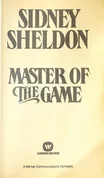
Master of the Game
Sidney Sheldon · 1982
A multi-generational saga following the Blackwell family from South Africa through the world's major cities, tracing how a determined woman builds an empire through intelligence, manipulation, and ruthlessness. The narrative moves backward and forward in time, revealing how family secrets and past betrayals shape each generation's choices. Business dealings, romance, and family loyalty collide as the characters pursue power across decades.
Sheldon's most ambitious novel in scope and length. It proved he could sustain epic storytelling over hundreds of pages while maintaining the psychological complexity of individual characters. The dual-timeline structure influenced how later thrillers approached narrative architecture.
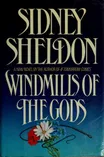
Windmills of the Gods
Sidney Sheldon · 1987
A college professor unexpectedly becomes a U.S. ambassador to Romania, inheriting a role filled with Cold War intrigue and international espionage. She discovers a shadowy organization called the Patriots for Freedom plotting her assassination through hired killers. As bodies accumulate and she struggles to identify which allies she can trust, she uncovers a conspiracy reaching into the highest levels of power.
Sheldon's most overtly political thriller, written during the tail end of Cold War tensions. It shows his ability to build suspense from geopolitical stakes while keeping the human cost of conspiracy at the emotional center. The ambassador protagonist challenged typical genre expectations.

The Naked Face
Sidney Sheldon · 1970
A New York psychoanalyst becomes the target of mysterious assassins after his patients and secretary are murdered. Unable to convince authorities of his innocence, he hires a private investigator to find the real killer while evading the law himself. The hunt spirals into organized crime, where past patients connect to present killers in ways the doctor never anticipated.
Sheldon's debut novel established his thriller credentials before his breakthrough. It reads like a hardboiled mystery transplanted into modern Manhattan, showing that even his first work had the structural rigor and pacing that would define his career. It earned an Edgar nomination for best first novel.

A Stranger in the Mirror
Sidney Sheldon · 1976
Two Hollywood entertainers marry after climbing from nothing to stardom through talent and manipulation. Their marriage becomes a psychological battleground where ambition, infidelity, and control spiral toward tragedy. A paralyzing stroke leaves one vulnerable, and the other's loyalty fractures. The novel pulls back layers on entertainment industry parasitism, showing how show business rewards ruthlessness and consumes human connection.
Sheldon's most character-driven thriller, built on psychological realism rather than plot machinery. The Hollywood setting gave him access to insider details that made the world feel authentic. It demonstrated that Sheldon could make readers care deeply about characters even as those characters engaged in morally compromised behavior.

If Tomorrow Comes
Sidney Sheldon · 1985
A woman accused of a crime she didn't commit escapes prison to become an international con artist and jewelry thief, crafting elaborate schemes across Europe and beyond. She steals from the wealthy while building a hidden network of allies. Her life of deception spirals into genuine romance and the question of whether someone living under false identities can ever find authenticity.
Sheldon's exploration of identity and reinvention through a con-artist protagonist. It reverses his usual moral logic: here the main character commits crimes that feel justified by past injustice. The novel showcases his ability to make readers root for someone engaging in objectively criminal behavior through psychological understanding.