
Author guide
Verlyn Klinkenborg
Verlyn Klinkenborg grew up on a farm in Iowa and spent decades observing the American countryside. After earning a Ph.D. in English from Princeton, he became known as one of the sharpest eyes on rural life, writing editorials for the New York Times editorial board for sixteen years and contributing to The New Yorker, Harper's, and the New York Review of Books. His work stands apart because it refuses both sentimentality and bitterness, instead finding the precise detail that reveals something true.
He teaches creative writing at Yale University and makes his home in rural New York, where he continues to write about the ordinary acts of farming, animal care, and seasonal change. Klinkenborg's strength lies in his ability to make readers see something they thought they understood (a pasture, a workday, an animal) as if for the first time. His books collect essays that are less about ideas than about attentiveness, showing how much meaning can rest in a single observation written with absolute clarity.
Where to start, in order
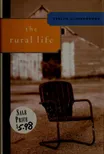
The Rural Life
Verlyn Klinkenborg · 2003
A collection of essays drawn from his New York Times editorials and other publications, each one a meditation on the rhythms of farm work, the behavior of animals, and the passing seasons. Klinkenborg writes about mending fences, training horses, the lives of barn cats, and the peculiar satisfaction of physical labor. These are not nostalgic portraits of rural simplicity but precise accounts of what it actually takes to live close to land and animals.
This is the book that established Klinkenborg's reputation and remains his signature work. It shows his method at its clearest: patient observation, exact language, and the belief that paying attention to small things matters. Readers who want to understand his voice should start here.
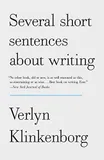
Several Short Sentences About Writing
Verlyn Klinkenborg · 2012
Part practical guide, part philosophical statement, this slim book teaches writing by asking writers to question their habits and assumptions. Klinkenborg focuses on the craft of clarity: how to find your own voice, how to listen to sentences, how to revise without losing what makes your writing true. Rather than rules, he offers provocations and examples.
This book reveals what Klinkenborg has learned from years of writing and teaching. It's essential for understanding not just how to write better but what he values in language itself, and those values show up everywhere in his essays. Readers interested in writing craft will find more here than in most craft books because Klinkenborg respects both the reader and the difficulty of the work.
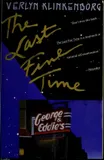
The Last Fine Time
Verlyn Klinkenborg · 1991
A book about the Great Lakes shipping industry, structured around Klinkenborg's conversations with an elderly ship captain. Through the captain's stories and memories, the book traces the history of a particular way of working: the freighters, the captains who spent their lives on the water, the decline of an industry. It's both biography and cultural history, grounded in specific voices and places.
His first book and an American Book Award winner, The Last Fine Time shows Klinkenborg's range beyond farming. It demonstrates that his observational gift works just as well with industrial history and human memory. The book proves he's a serious historian of ordinary American life, not just a rural memoirist.
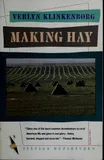
Making Hay
Verlyn Klinkenborg · 1986
His first published book, a record of learning to farm and living through the seasons in rural Iowa. Klinkenborg writes about the labor of haying, the machinery that fails, the weather that cooperates or doesn't, and the physical knowledge that accumulates through doing the same work over and over. The book is part journal, part meditation on why someone would choose farm work.
This is where Klinkenborg's voice began. Making Hay shows the roots of everything that follows, the initial commitment to paying close attention to agricultural work and to writing about it without false improvement. It's the foundation on which his reputation rests.
Timothy; or, Notes of an Abject Reptile
Verlyn Klinkenborg · 2006
A book about Timothy, a tortoise inherited by the eighteenth century naturalist Gilbert White. Rather than a straightforward biography, Klinkenborg weaves together White's observations about the tortoise, Klinkenborg's own reflections on animal behavior and longevity, and the strange intimacy between a human and a creature who lives longer than any human relationship. It's part natural history, part philosophical essay.
This book shows Klinkenborg doing something different: taking a single animal as his subject and following it across centuries and perspectives. It's a departure from his farm writing but demonstrates the same gift for noticing details and finding their significance. The book expands what kind of subject matter his method can address.
More Scenes from the Rural Life
Verlyn Klinkenborg · 2013
A continuation of The Rural Life, this collection gathers essays written over the subsequent years. Klinkenborg returns to his familiar subjects: horses, gardens, trees, seasons, neighbors, and the work of living in the country. Some pieces are brief observations; others are longer meditations. Throughout, the same attentive eye remains fixed on the actual texture of rural existence.
By this point, Klinkenborg had been writing rural essays for decades. More Scenes shows the deepening of his practice, the way his attention has become even more precise. Readers who loved The Rural Life will recognize the voice and find it refined, not repeated. The book proves that his method was not a phase but a genuine commitment.