
Author guide
Walter Mosley
Walter Mosley emerged as a novelist in 1990 with Devil in a Blue Dress, a detective story set in postwar Los Angeles that would launch one of crime fiction's most enduring series. Immediate recognition came when a future president named Mosley among his favorite authors, accelerating a career trajectory that would span decades and multiple genres. By the 2000s, Mosley had solidified himself as a major American literary figure, receiving the Edgar Award's Grand Master honor in 2016 and becoming the first Black writer to win the National Book Foundation Medal for Distinguished Contribution to American Letters in 2020.
His novels are built on a foundation of social realism. Mosley writes about race, injustice, and survival in Los Angeles during the mid-twentieth century, weaving historical detail and moral complexity into stories that never settle for simple answers. His Easy Rawlins detective, a Black private investigator navigating a segregated city, became iconic precisely because Mosley treated the character as fully human, neither hero nor victim, but a man doing necessary work in impossible circumstances. Beyond crime fiction, Mosley has written science fiction, created other detective characters, and explored philosophical questions about redemption and reinvention, proving his range extends far beyond a single franchise.
Now in his seventies, Mosley continues to publish new work and remains active in public discourse about writing, politics, and justice. His influence extends beyond the page into conversations about who gets to tell stories about American life and whose experiences matter. He has demonstrated that commercial success and artistic seriousness are not mutually exclusive, and that crime fiction can carry the weight of historical memory.
Where to start, in order
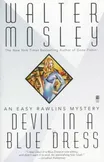
Devil in a Blue Dress
Walter Mosley · 1990
Easy Rawlins, a Black man navigating 1948 Los Angeles, takes a job finding a missing white woman for reasons that will haunt him. The search becomes a map through the city's racial boundaries, corrupt police, and the machinery of casual, institutional violence that structured post-war American life.
This is the book that made Mosley a writer and introduced one of American literature's most memorable characters. Every serious reader of crime fiction should encounter Easy Rawlins here, at the beginning, where his essential nature emerges.

White Butterfly
Walter Mosley · 1992
A serial killer preys on young Black women across Los Angeles. The police ignore the murders until white society takes notice. Easy is drawn into a hunt that exposes the LAPD's indifference to Black lives and the cost of justice deferred.
White Butterfly demonstrates Mosley's mastery of the series formula while maintaining the moral weight that distinguishes his work from routine detective fiction. The title refers to the novel's central irony: a murdered Black woman made invisible by a system that sees her as worthless. This is Mosley at his most focused and artful.
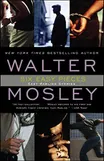
Six Easy Pieces
Walter Mosley · 2003
A collection of seven interconnected stories featuring Easy handling various cases while working as a high school custodian. From arsons to murders to missing people, the stories show Easy's world beyond the scope of any single novel.
Often cited as the highest-ranked Easy Rawlins novel, Six Easy Pieces represents the series at its artistic peak. The episodic approach allows Mosley to achieve both intimacy and scope, exploring the texture of Easy's life through varied stories that build into something more than the sum of their parts. This is where readers see what the character has become.
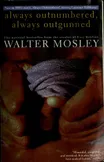
Always Outnumbered, Always Outgunned
Walter Mosley · 1997
This collection of interconnected stories follows Socrates Fortlow, an older Black man living in South Los Angeles after his release from prison. Unlike the detective, Socrates is trying to live a quiet life of modest work and contemplation, but the city draws him into small confrontations and acts of mercy. The stories accumulate into a portrait of a man attempting dignity in a society that has discarded him.
This book won the O. Henry Award and represents Mosley's full range as a writer. It proved he could create a character as compelling as Easy Rawlins outside the detective genre, and that crime fiction was just one of his tools for exploring American life. Readers who come to this after Easy Rawlins discover that Mosley's concerns with justice and survival extend everywhere.
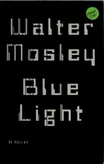
Blue Light
Walter Mosley · 1998
A strange blue light appears across North America, transforming anyone who sees it and bestowing upon them supernatural abilities. In Mosley's only science fiction novel to date, this phenomenon reaches the San Francisco Bay Area, where various people must make sense of their changed lives and the responsibility that comes with power. The novel blends science fiction speculation with Mosley's characteristic attention to race, class, and the realities of people struggling to survive.
Blue Light shows that Mosley's concerns with justice and human dignity are not confined to historical crime fiction. By moving into speculative territory, he demonstrates that his real subject is American society in all its forms, and the ways power concentrates or remains distributed among different people. It is a necessary reminder that he is not merely a crime novelist.

Fearless Jones
Walter Mosley · 2001
Mosley creates another detective series with Fearless Jones, a fearless African American man living in 1950s Los Angeles who solves mysteries often involving rare books, lost treasures, and clients desperate enough to hire someone outside the official system. Though sharing a historical setting with Easy Rawlins, Fearless Jones is a fundamentally different kind of protagonist, driven by curiosity and loyalty rather than moral calculation. The novel shows Mosley's ability to build multiple detective stories within similar circumstances.
Fearless Jones demonstrates that Easy Rawlins did not exhaust Mosley's possibilities within detective fiction. By creating a character animated by different values and motivations, Mosley proves that the hard-boiled detective form remains endlessly generative in his hands. It also expands the geography and subject matter of his work, showing Los Angeles as a place of multiple stories and multiple kinds of survivors.