
Reading list · 8 books, ranked
The Best Dystopian Novels
Dystopian fiction at its best forces readers to confront the mechanics of control and the fragility of freedom. This list spans from early 20th-century prophecies to contemporary explorations of surveillance and decay, mixing canonical works that defined the genre with underrated novels that deserve wider recognition. Whether you're drawn to psychological manipulation, totalitarian surveillance, environmental collapse, or subtle horrors that build quietly, these eight books show different faces of how societies fall apart.
Updated 2026-07-13
Nineteen Eighty-Four
George Orwell · 1949
In a world of perpetual war, a totalitarian superstate maintains absolute power through propaganda, surveillance, and the relentless rewriting of history. Winston Smith, a low-ranking party member, begins to question the regime from within. Orwell's vision of Big Brother watching through telescreens and citizens redefining truth has become shorthand for political oppression itself.
This is the book that established how modern readers think about dystopia. Orwell's focus on state control through language and observation created the blueprint that generations have either followed or reacted against.
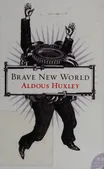
Brave New World
Aldous Huxley · 1932
In a future of engineered castes, pharmaceutical happiness, and consumerism without resistance, stability replaces freedom. Huxley's World State maintains power not through pain and fear but through pleasure and distraction, making dissent nearly unthinkable. Citizens are genetically designed for their social roles and chemically soothed when discomfort arises.
Where Orwell feared chains and torture, Huxley feared comfort and apathy. The novel's vision of a dystopia built on contentment is often more unsettling to contemporary readers than overt tyranny, making it essential for understanding different flavors of oppression.
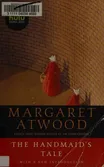
The Handmaid's Tale
Margaret Atwood · 1985
The Republic of Gilead has emerged from environmental collapse and plummeting birth rates, creating a theocratic state that reduces women to reproductive vessels. Offred moves through this brutal hierarchy as a handmaid in a commander's household, existing only to bear children for the ruling class. Atwood builds the regime's logic methodically, showing both its surface order and the fragile resistance beneath.
This novel grounded dystopian fiction in realities that other classics overlooked. It remains prophetic about how authoritarianism seizes control through the body and the family, making it essential for any serious dystopian reading.
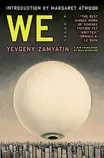
We
Yevgeny Zamyatin · 1924
D-503 is a citizen of the One State, a crystalline society where humans are numbered rather than named and every moment is regulated by the Table. He begins a secret diary that documents his attraction to a woman and his growing suspicion that the regime's mathematical perfection masks something rotten. Zamyatin's vision prefigures both Orwell and Huxley, combining elements both would later develop.
Published in Russia in 1924 and smuggled west after suppression, We influenced Orwell and Huxley and deserves recognition as the prototype. Its fever-dream poetry and early statement of totalitarian logic make it both historically crucial and disturbingly strange.
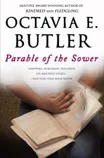
Parable of the Sower
Octavia E. Butler · 1993
Set in Los Angeles in the 2020s, the world is fracturing through environmental breakdown, economic inequality, and the collapse of public services. Lauren Olamina, a teenage prophet, sees her neighborhood burning and understands that survival means movement and building community. Butler grounds dystopia in the present day, showing how chaos arrives not through sudden political overthrow but through slow erosion.
Butler's prescience about environmental dystopia and her focus on ordinary people responding to cascade failure makes this novel feel more urgent now than when published. She avoids both totalitarian grandeur and false hope, instead showing how individuals adapt to degradation.
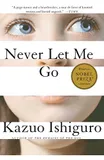
Never Let Me Go
Kazuo Ishiguro · 2005
Kathy H. recalls her childhood at Hailsham, an exclusive English boarding school that operates with mysterious autonomy. Only gradually does the reader understand the school's purpose: its students are genetic clones being raised for organ donation. Ishiguro's restraint is devastating, letting horror emerge through quiet gaps rather than explicit revelation.
This novel achieves dystopian power through indirection rather than spectacle. Ishiguro asks whether a system can be dystopian if its victims remain unaware of their suffering, and he does it through a narrator looking back on beauty and complicity.
The Machine Stops
E. M. Forster · 1909
Humanity lives underground in a vast interconnected machine that provides everything: food, entertainment, and communication through air tubes and telecommunication devices. The surface is abandoned and mythologized. Vashti and her son Kuno live in this womb until Kuno's heretical desire to visit the surface disrupts their mechanical existence. Forster wrote this over a century before the internet became central to life.
For its time, the prescience is staggering. Forster foresaw isolation through technology, the elevation of abstract communication over presence, and the brittleness of systems that assume continuous power. It remains the most underrated ancestor of contemporary tech dystopias.
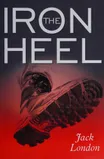
The Iron Heel
Jack London · 1907
In early 20th-century California, a revolutionary oligarchy called the Iron Heel rises through corporate power consolidated into a dictatorship. Avis Everhard and her husband become socialists resisting this brutal order through underground networks. London wrote this as prophecy of fascism decades before its full emergence, rooting dystopia in class struggle and economic concentration.
London's focus on wealth condensation and the marriage of capital to state power makes this novel feel startlingly contemporary. It's the most openly political dystopia in this list and the least read, yet it deserves recognition for naming mechanisms of control that shaped the century.