
Reading list · 8 books, ranked
Essential Science Fiction Novels
Building a serious science fiction shelf means reading across decades and modes, from the mathematical epics that founded the genre to cutting-edge work that redefined what SF can do. These eight novels represent the foundation: writers who either invented major traditions or pushed against them in ways that forced the genre to evolve. Start here.
Updated 2026-07-13
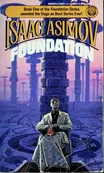
Foundation
Isaac Asimov · 1951
Five interconnected stories spanning centuries trace the rise and fall of a galactic empire on the edge of collapse. Drawing on psychohistory (mathematics applied to human society), a mathematician founds a settlement designed to shorten the dark ages to come. It is less about individual characters than the vast machinery of history itself.
Foundation created the template for SF world-building at planetary scale. Any serious reader needs to understand how Asimov thought about civilization, technology, and time as plot devices that carry ideas.
Dune
Frank Herbert · 1965
Paul Atreides arrives on the desert planet Arrakis as part of a political maneuver by his family, only to find himself caught in complex webs of prophecy, religion, ecology, and power. The novel interweaves planetary science, economics, warfare strategy, and the psychology of leadership into an intricate plot where no decision is simple.
Dune set the standard for SF epics and proved the genre could sustain intricate plots with political weight. It remains unmatched in how thoroughly it imagines a alien world's ecosystem, culture, and economics as unified systems.
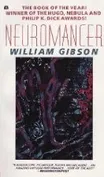
Neuromancer
William Gibson · 1984
Case, a washed-up computer hacker, is hired to break into an artificial intelligence system alongside Molly, a street samurai with mirrored eyes and surgical reflexes. Together they navigate cyberspace (the term Gibson invented) and real-world Tokyo underworld on a mission whose stakes expand as the story unfolds.
Neuromancer did for cyberpunk what Foundation did for space opera. It shaped how technologists and writers imagine AI, virtual reality, and human-machine interfaces. For understanding modern SF and its technological orientation, this novel is indispensable.
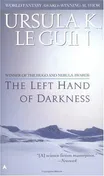
The Left Hand of Darkness
Ursula K. Le Guin · 1969
An envoy from Earth arrives on the frozen planet Gethen to negotiate its inclusion in a galactic alliance. His mission is complicated by the indigenous population's unique biology: they can adopt either male or female sexual characteristics only during breeding season. The novel is as much about gender, identity, and human connection as it is about alien contact and politics.
Le Guin demonstrated that SF could be simultaneously rigorous in its world-building and deeply interested in the human experience. The novel uses SF premises to explore gender and society in ways that still resonate. Essential for understanding how far SF's reach extends beyond technology.
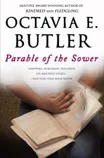
Parable of the Sower
Octavia E. Butler · 1993
Set in Los Angeles in the 2020s, the world is fracturing through environmental breakdown, economic inequality, and the collapse of public services. Lauren Olamina, a teenage prophet, sees her neighborhood burning and understands that survival means movement and building community. Butler grounds dystopia in the present day, showing how chaos arrives not through sudden political overthrow but through slow erosion.
Butler's most prophetic and perfectly realized novel. The book combines intimate character drama with systemic social observation and philosophical depth in a way that makes it both immediately gripping and endlessly relevant. For readers wanting SF that operates at multiple levels simultaneously, this is the benchmark.
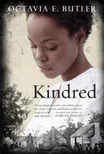
Kindred
Octavia E. Butler · 1979
Dana, a Black woman living in 1970s Los Angeles, is suddenly transported back in time to a Maryland plantation in the antebellum South. She discovers she is being pulled back repeatedly across decades to save the life of her ancestor, forcing her to witness and survive the brutality of slavery while struggling with her own survival and resistance.
Kindred stands at the intersection of SF tradition and African-American history, using time travel not as escapism but as a way to confront the past's ongoing weight. Butler's handling of genre and history makes this novel essential for understanding how SF can address real-world power and injustice.
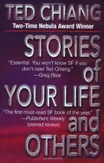
Stories of Your Life and Others
Ted Chiang · 2002
A collection of philosophical short stories that use SF concepts to explore language, consciousness, free will, and the nature of existence. The title story follows a linguist learning an alien language that fundamentally restructures how she perceives time and causality. Each story is precisely constructed to maximize intellectual and emotional impact.
Chiang represents the cerebral, idea-driven wing of modern SF. These stories prove that SF's true power lies in taking a single concept seriously and following it to unexpected places. For readers who want SF to make them think differently, not just entertain them, this collection is essential.
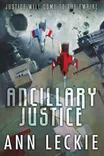
Ancillary Justice
Ann Leckie · 2013
Breq is the sole survivor of a starship AI that once controlled multiple bodies. Now in a single body, she pursues revenge against the imperious ruler who destroyed her ship. The narrative is threaded with Breq's recovery of memories from her distributed existence and an exploration of identity, consciousness, and empire from a perspective that was once vast and is now radically constrained.
Ancillary Justice won the Hugo, Nebula, and Arthur C. Clarke awards in the same year. It represents contemporary SF pushing the boundaries of perspective, identity, and narrative voice. The novel asks fundamental SF questions (what constitutes a self, who counts as human) while delivering genuine political intrigue and emotional stakes.