
Reading list · 7 books, ranked
The Best Books for Contractors and Trades Businesses
The trades have a specific version of the small business problem: the owner is usually the best technician on the crew, which makes them the bottleneck the moment the company grows past one truck. These books are about that trap and how people get out of it.
Updated 2026-07-30
The E-Myth Contractor
Michael E. Gerber · 2002
Gerber's systems argument applied to the trades specifically, where the owner is usually the best technician and therefore the bottleneck. The trade-specific version earns its place over the general one if you swing the hammer yourself.
Gerber's systems argument aimed directly at the trades, where the owner swings the hammer and the business stops when they do. The trade-specific version earns its place over the general one.
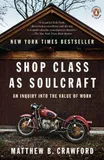
Shop Class as Soulcraft
Matthew B. Crawford · 2009
An essay on the value of working with your hands and tools, arguing that hands-on skills have been systematically devalued while abstract knowledge work is overvalued. Crawford draws on his own experience as an electrician and mechanic to explore why building, fixing, and making things provides intellectual satisfaction that office work often lacks. The book challenges the assumption that everyone should abandon technical work for knowledge careers.
Crawford left a think tank to fix motorcycles and wrote the best defense of skilled manual work there is. Not a business book, and the clearest account of why the trades attract the people they attract.
Profit First
Mike Michalowicz · 2014
Flips the accounting so profit is taken first and the business runs on what remains, using multiple bank accounts as a behavioral constraint. The reasoning is more psychology than finance, which is exactly why it works on owners who ignore spreadsheets.
Job costing tells you what a job made after it is over. This tells you how to hold onto it, which for contractors with lumpy cash flow and seasonal swings is the harder problem.
The Pumpkin Plan
Mike Michalowicz · 2012
Grow by cutting: identify the clients worth keeping, fire the rest, and specialize hard into what is left. Uncomfortable advice for anyone taking every job that calls, and the right advice for most of them.
The chapter on firing your worst clients is the one to read first. Most trades businesses are subsidizing a handful of accounts that cost more than they pay.

Traction
Gino Wickman · 2011
Wickman presents the Entrepreneurial Operating System, a framework for running a business using clarity on vision, people, data, issues, processes, and cash. The book includes a simple planning tool you can use right now. It's practical and actionable without being overwhelming.
A weekly meeting rhythm and a short list of numbers, which is roughly what separates a crew that grows from a crew that stays exactly the size the owner can personally supervise.
$100M Offers
Alex Hormozi · 2021
On constructing an offer so specific and so de-risked that price stops being the objection. Self-published and written in a hard-sell register that puts some readers off, but the mechanics of offer construction are laid out more clearly than in most trade books.
Useful in a trade specifically because the default is bidding against three other quotes on price alone. Constructing an offer that is not comparable is the way out of that.
They Ask, You Answer
Marcus Sheridan · 2016
A pool installer saved his company by answering, in public and in writing, every question customers actually asked, including the ones about price and about competitors. The most useful content marketing book because the method is uncomfortable rather than clever.
Written by a pool installer, which makes it the rare marketing book that already speaks the language. Answering the price question in public is counterintuitive and it works.
From the shelf to the work
Getting off the bid-three-quotes treadmill
The trap Gerber describes has a marketing version. When every job arrives through a homeowner collecting three quotes, you are competing on price against whoever is most desperate that week, and no amount of systems work fixes it. The way out is being the one they call first rather than the third number on the list.
That means being findable at the moment something breaks, which is a specific and fairly mechanical problem: how home service companies get found when something breaks walks through what it takes, and there are trade-specific versions below.
Savo Group builds and runs Bookmark, so treat this as a recommendation from an interested party. It has no bearing on which books are above.
Where to go next
- SEO for plumbers · emergency intent, and why it prices differently
- SEO for HVAC companies · the seasonality problem, handled
- SEO for roofers · storm chasing and the reputation fight
- SEO for electricians · residential against commercial intent