
Reading list · 8 books, ranked
The Best Crime Novels of the 1990s
The 1990s brought a seismic shift in crime fiction. Mosley, Connelly, Lehane, and Pelecanos arrived as full-throated voices, moving the genre away from cozy puzzles and into the psychologies of flawed investigators navigating cities as complex as any character. These eight books defined an era when crime writers stopped apologizing for taking serious subjects seriously.
Updated 2026-07-13
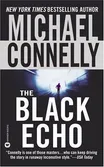
The Black Echo
Michael Connelly · 1992
Detective Harry Bosch investigates the murder of a Vietnam veteran found in a concrete pipe in the Hollywood Hills. The case spirals outward to touch the Vietnam War itself, a bank heist, and the fault lines running through 1990s Los Angeles. Bosch's obsessive hunt for truth collides with bureaucratic indifference and institutional corruption.
Connelly built the template for contemporary police procedurals. Bosch feels like a complete person: damaged, rigorous, operating on his own moral compass rather than departmental orders. The novel proved that procedural fiction could sustain literary weight while remaining utterly gripping.
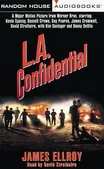
L.A. Confidential
James Ellroy · 1990
Three cops in 1950s Los Angeles, each corrupt in different ways, become tangled in a murder investigation that pulls them toward truth or deeper into the machinery of their own deception. Ellroy builds a Los Angeles where sex, violence, politics, and narcotics money form the actual government, with the LAPD as its instrument.
Ellroy's staccato, telegraphic prose strips away sentimentality. He shows cops as men pursuing power through violence while telling themselves stories about justice. The novel's ambition matches its execution, making it one of the few crime novels that feels genuinely important.
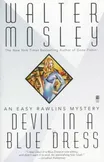
Devil in a Blue Dress
Walter Mosley · 1990
Easy Rawlins, a Black man navigating 1948 Los Angeles, takes a job finding a missing white woman for reasons that will haunt him. The search becomes a map through the city's racial boundaries, corrupt police, and the machinery of casual, institutional violence that structured post-war American life.
Mosley writes with a lyrical, almost novelistic grace unusual in crime fiction. Easy is someone readers come to know across years, and his perspective forces readers to see Los Angeles not as backdrop but as a character shaped by who holds power and who doesn't. The novel works as both mystery and social history.
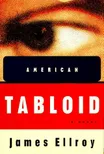
American Tabloid
James Ellroy · 1995
Three men working in the criminal underworld, the LAPD, and federal law enforcement intersect across the 1950s and into the Kennedy era. Ellroy braids together organized crime, the CIA, the mafia, FBI ambitions, and presidential corruption into a narrative that feels less like fiction than a secret history of post-war America.
Ambition distinguishes this novel. Ellroy doesn't just solve a crime; he reimagines how power actually worked in twentieth-century America. The book treats criminal networks and government agencies as extensions of each other, pursuing the same goals through different means. TIME magazine named it Novel of the Year.
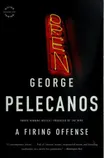
A Firing Offense
George P. Pelecanos · 1992
Nick Stefanos, a young marketing consultant in Washington, D.C., investigates the disappearance of a coworker and finds himself inside a criminal world he didn't know existed beneath the city's neighborhoods. The mystery pulls him through race, class, and the way ordinary people become entangled in violence.
Pelecanos introduced readers to a Washington, D.C., that existed outside the power corridors and glossy memorials. His street-level perspective, crackling dialogue, and refusal to sentimentalize his characters established him as a major voice. The novel works because Pelecanos knows the city in ways that matter.
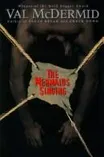
The Mermaids Singing
Val McDermid · 1995
A serial killer torments a small English town, and a psychological profiler and a local detective must enter the killer's mind to stop him. McDermid sets the psychological battle against institutional skepticism and the gaps between what the profiler perceives and what the police are willing to believe.
McDermid brought the psychological profiler into crime fiction as more than a consulting device, making that figure a protagonist with her own vulnerabilities and blind spots. The novel won the Crime Writers' Association Gold Dagger and opened a lane for psychological crime fiction that was still being explored decades later.
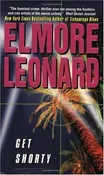
Get Shorty
Elmore Leonard · 1990
Chili Palmer, a Miami loan shark, travels to Hollywood pursuing a debt and discovers he has an unexpected talent for the movie business. Leonard weaves together the mob, Hollywood hustlers, actors, and producers into a narrative where everyone is running a con and the question becomes which con will hold.
Leonard proved that crime fiction could be funny without sacrificing tension. Chili Palmer is charming and dangerous in equal measure, and watching him navigate worlds where surface cordiality masks ruthless self-interest became a template Leonard would return to repeatedly. The novel's commercial success brought crime fiction into mainstream attention.
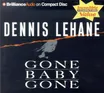
Gone, Baby, Gone
Dennis Lehane · 1998
Detectives Patrick Kenzie and Angie Gennaro search for a missing four-year-old in working-class Boston. The case forces them into neighborhoods where family loyalty, revenge, police corruption, and the choices between official justice and street justice become impossible to separate.
Lehane demonstrates how much emotional and moral complexity can fit inside a tightly constructed mystery. Gone, Baby, Gone works as procedural, as study of a marriage under pressure, and as meditation on what justice actually means when the system fails. The Boston setting becomes inseparable from character and plot.